PRACTICAL MORAL SOLUTIONS TO ASSURE WORLD SUSTAINABILITY 2011
PRACTICAL SOLUTIONS TO KEY WORLD PROBLEMS
“The exponential population growth is so far out of balance that this will impose heavy penalties on individuals as well as nations. Ultimately this will impose coercive measures of fertility regulation. This can be avoided by increasing knowledge and availability of contraception. If such measures are not made available, the penalties to the poor and nations will be enormous and the ripple effect will inevitably extend to the rich as well." Robert McNamara, ex-U.S. Secretary of Defense and ex-President of the World Bank.
SUMMARY:
The planet can sustain 6 billion people. We have surpassed this number. We are already seeing increases in death and diseases due to decreasing sustenance as shown in the home page graph. At the present rate of population growth, we expect about 3 billion more people in the next 40 years.
Our increasing consumption is stripping our agricultural, water and fuel supplies. Fossil fuels, fertilizers and insecticides are poisoning the air and water, causing diseases and death. At the rate we are going, we will have no environment to live in about 100 years from now unless we address these problems urgently.
Nothing in the history of mankind has so threatened the world as overpopulation. Our peace, economic stability and, ultimately, our survival depends on our willingness to face this problem. The present report encompasses solutions in all fields because overpopulation touches every aspect of our and our planet’s life. The know-how to solve these problems is already available. It is imperative that we apply and share this knowledge with optimism, so we all take measures to prevent the disastrous effects that this problem, if unchecked, will bring.
The solution is simple: mass education regarding these problems, hand in hand with conservation, family planning, good stewardship for our environment and one another. In order to assure future generations sustenance, new couples must only bring one or, maximum, two children into their families or all present and future generations will have no food or environment to sustain them.
In 2018 the United Nations Inter Parliamentary Climate Committee reported: climate change is running faster than we are – and we are running out of time.
In the last fifty years, human exponential population growth is causing of extreme weather, rising sea levels, diminishing Arctic sea ice, pollution, human migration due to environmental degradation, and extinction of species at unprecedented rate. (xq)
It is projected that billions of people will have to flee coastal regions, and due to lack of proper family planning and assistance about 2 BILLION more children will be added in the next two decades. (xr)
Today, in the USA already, one out of every five children go to bed hungry every night. (xs)
Increased water scarcity in some of the world’s most unstable regions. (xt)
And a total wipe-out of the world’s coral reefs and plankton which will be devastating as these produce up to 80 % of worlds oxygen. (x u)
This will take unprecedented changes in all aspects of society – especially in key sectors such educating and subsidizing family planning. Changing from animal based, processed product diet to whole plant foods. Change land use for raising vegetable-based foods, urgently reforest and abandon fossil energy, re organize industrial production, redesigning buildings, cities and urge use of mass transport. (xv)
Although the task is daunting, we must urgently heed this call to action and urgently accelerate implementation of the Paris Climate Agreement before it is too late we CAN do this. We saw how during COVID the world was willing to partially immobilize to avert the pandemic, co, YES, WE CAN, if we learn the seriousness of the situation at hand..
In 2002, the president of the World Health Organization mentioned to the international community, that having an honest dialog with one's countrymen will allow them to see the seriousness of the realities of our times, and they will champion reforms. How can they do so if no one openly speaks to them about this?A new ethic and moral spirit must arise from this, so we can walk into the future, hand in hand as fellow men. The alternative is devastation and war.
TIME:
The United Nations IPCC report gives humanity to heed their advice as mentioned above. It gives us merely twelve years to address climate change or the devastation to society and the planet will be irreparable. (xp).
We
are hopeful and believe the doomsday prophesies will not have to
take place since mankind already has the know-how of fixing
these problems and can catch up for lost time to curb these
problems if we start NOW. We, however, need our leaders to
bring this situation to light, and have them take steps to
address these problems. Unless leaders openly point to this
problem, there will not be a chance to make any changes, for the
ignorance of the subject is almost universal.
PERCEPTION: Perception is the greatest problem. Unfortunately, most people are unaware of the overpopulation problem and its urgency. Many, for political, economic and religious reasons, distort the truth by seading misinformation claiming there is no such thing as an overpopulation problem, or claim populations are decreasing.
An illiterate poor hungry farmer cannot comprehend that there is a problem of overpopulation, for where he is, there are usually few people. When one sees the vastness of the world, it is inconceivable that the resources and space are limited. Yes, all of mankind can fit in an area the size of Colorado, so there is no shortage of space, but the planet cannot produce at the same rate as our growing needs -- therein lies the problem. We must teach that the newborn demand sustenance at a faster pace than the planet can provide. Unless we limit our new families to no more than one or two children per family, conserve and become good stewards of our planet mankind will not subsist in the near future. This is in our and our children's best immediate economic and spiritual interest.
ARCHAEOLOGY AND HISTORY: Easter Island, once a verdant forest teeming with wildlife and people, is now a barren grassy knoll studded with giant godlike monoliths staring forlornly at a future that never came. They are a reminder of how a lack of respect for the environment and ignorance of family planning caused their civilization to become extinct. They exhausted all natural supplies, having to ultimately resort to cannibalism. In Discovery magazine’s: EASTER ISLAND’S END, we see how lack of food caused ethnic cleansing amongst its inhabitants and, ultimately, led to cannibalism of their own people (6). Recently, a similar problem arose in Uganda because of severe hunger that led to a widespread massacre disguised as an “ethnic cleansing”. Let this be a presage of things to come (7).
In Phoenician times Cyprus, Malta, Greece, Syria and Lebanon were covered by lush forests teeming with trees and wildlife. Man burned the forests to cultivate crops, used timber for building and overgrazed the land with goats, thereby creating the barren lands we know at present (112). Reforesting now is beyond these nations’ economic means (8). The USA and the world are facing enormous deforestation. Tree cutting, needed to clear areas for more housing, developing, agriculture or for the use of timber is causing havoc to the environment. The forestry organization mentioned this severe problem in 1997 (9)
DEMOGRAPHICS, LAND RESOURCES AND HUNGER: According to a report of the Swedish Royal Academy of Sciences, about 0.5 hectares per capita of cropland is needed to provide a balanced plant and animal diet for humans worldwide. For the 1990 population of 5.5 billion, only 0.27 hectares per capita were available and it has declined further since (10).
According to World Bank figures, 6 million children die annually from malnutrition. In the last 12 years, 40 million more people have been added to the list of moderate poverty, making their total above 2.7 billion. The World Bank defines “moderate poverty” as subsisting on $1-$2 per day. Thus 1/3 of the planet’s people live in hunger. Hunger causes wars and forces people to leave their lands. As refugees they have insufficient food, shelter and medicines. Death caused by these circumstances is already growing worldwide (11). Some argue that poor distribution of food is the reason there is starvation in many countries. The UN Global Policy Forum shows how the shortages are real, not merely political, although HUNGER IS FOR THE MOST PART DUE TO POOR GOVERNMENT (12).
Now we have 6.3 billion people and have, at best, small parcels of marginal arable land in reserve. Annually about 28 million acres of woodland and forests are destroyed for farming, building and agriculture. The Food and Agriculture Organization (FAO) conducted a study concerning potentially arable land called: Agriculture toward 2000 This study reported that only 11% of the earth's surface is suitable for agriculture. It mentions that cultivated land is lost at about the same rate as new land that is being transformed into desert due to soil erosion. It recommends that to mitigate land destruction, at least 25% of arable land must be protected by programs of water and soil conservation. It concludes that "by the end of the century, shortage of land will have become a critical constraint for about two-thirds of the population of the developing countries”. We have arrived at this milestone, Uganda is an example of this land shortage that triggered massive killings due to competition for food.
In 40-45 years at current birth rates, we will have about 9-10 billion people, according to United Nations' projections. The United States showed 5 million people in the l800 census. In 2005 the estimates show 295.7 million. How then can we expect to feed more than the land can sustain? Modern methods, including genetically engineered seeds and animals, have temporarily closed the gap in food shortages. Their abundance has worsened the problem, for more and more people could be fed, thus allowing for unpredicted population growth. These agricultural methods are now proving destructive to our lands and are decimating them. Another factor is that there is a limit to how much crops and animal husbandry can produce. This is already reflected in the grain shortages and increasing human death rates. The FAO report’s prediction has now been proven correct. (11) (2).
ETHICS AND POLITICS: The population graph on our cover page (www.lifewatchgroup.org) shows that since the dawn of man, human populations were kept in check until the 1800’s by disease caused by virus/bacteria/parasites etc. This natural balance was forever altered by vaccines, antibiotics and advances in medical care. This was spurred by the advent of the industrial revolution, the green revolution, mechanized farming, genetic engineering, etc. By virtue of this, man altered the natural order and by doing so, experienced unsustainable exponential population growth. No world leader advised us that this unchecked growth would come tumbling down because this would have been unpopular. The need for growth, fueled by economic and political interest, made it so that no world leader, even today, wants to address this problem. Many, for political, economic and religious reasons, distort the truth by spreading misinformation claiming that there is no such thing as an overpopulation problem. Due to their own agendas some distort the truth claiming that populations are dwindling. This denial is most evident among religious organizations, governments and businesses, who, needing more subscribers, loath limiting population growth as it would diminish their influence or economies. Some religions, in order to increase followers at any cost, encourage large numbers of children per family. To assure this, for example, some religions label birth control pills and condoms etc as “immoral”. The ethical question is: is it not more immoral to expose the user to AIDS or the spreading of it? In other cases, the user is forced to bring into this world a child he does not want and cannot feed. In such cases some opt for infanticide or abortion, a growing human scourge. Is this a moral situation? Some countries that are facing social security fund-shortages need the new generations to fund them. In such countries, discouraging births would be against their own agenda; for they need new generations joining the work force to pay for social security. These new generations however will face no future of their own at the rate we are going.(13)
Now that we have reached the point of the planet’s limit of human sustainability, let us teach new couples that if they want their children to have a sustainable future, they have to make the moral decision of limiting their family. The alternative is if we continue with the present population growth, the strong will force out the weaker by means of war or starvation, and usurp their resources. Let us not forget the fall of Rome, the French Revolution etc., when hungry hoards destroyed the greatest and most powerful societies. When the numbers of the hungry increase, no US military force will be able to cope with the ramming of its core by the hungry from within and from abroad. Let us not wait for governments to force us to limit us to one child per couple, as China did. China was forced to impose such drastic measures because it faced huge famines and had not addressed their overpopulation problems in time. Should it have been addressed when there was time, they could have allowed for two children per family. China has learned this the hard way. By doing so, they are becoming the fastest growing economic superpower of the 21st century (14).
Now, according to the World Health Organization 1/3 of the world is well-fed, 1/3 suffers from hunger while living on $1-$2 U.S. Dollars a day and 1/3 are starving and live on less than $1 a day, so-called “absolute poverty”. About 160 million of the world’s children under the age of five are malnourished according to the U.N reports. It has been calculated that millions of deaths could be prevented for the price of ten Stealth bombers! According to UNICEF the world's 358 billionaires have assets exceeding the combined annual incomes of countries with 45 % of the world's people. To satisfy the world's sanitation and food requirements it would cost the US only $13 billion - what the people of the United States and the European Union spend on perfume each year. The US Congress states that the USA spent, in the Afghanistan-Iraq war, $208 billion at the expense to the US taxpayers as of July, 2005 (See the politics of fossil fuels below). The assets of the world's three richest men are more than the combined GNP of all the least developed countries on the planet (15) (16). This poor distribution of wealth allows for such human inequity. The social democratic model of Sweden shows how, in this country, such disparity would never be tolerated (Charts J and K).
To a great extent poverty and hunger are political . Farm subsides in the USA and other countries make it so that it is impossible for many poor farmers in third world countries to compete with their products; thus they go hungry. These poor countries have then to ask for foreign aid, and end up paying interest to the lender nations that caused them this unfair competition. What is needed is a fair playing field. Stop the farming subsidies in the USA and elsewhere and give the local farmer’s worldwide a chance to make their products competitive so they can feed their own. For example, Switzerland pays a $3 subsidy per cow per day to its farmers. Brazilians’ poor say they would love to be a Swiss cow, as it is wealthier than them. These poor people only have their lands and their hands. No genetically engineered seeds, no subsidies, no sophisticated fertilizers or irrigation, no complex machinery and no satellites to tell them when to irrigate or when to fertilize, no sales personnel, no warehouses and/or stores distribute their products. If we do not remove subsidies, the poor will have no chance while the multinational corporations grow in wealth. Another example of political abuse causing poverty is the many government leaders and dictators supported by wealthy governments because they are willing to sell their national resources at a discount, taking away from the wealth of their citizens. Many a political leader that has stolen from its national treasure has been given asylum by other nations so the funds will not return to their country. International laws protecting nations from such pillage must be created, making leaders accountable, so this white collar theft is penalized to the strictest extent of the law, and no asylum in such cases shall be granted.
Some countries refuse to assist in family planning and promote sex education as well as prohibiting doctors to advise women with unwanted pregnancies of their reproductive rights. The USA passed in the last 5 years a "gag rule" to prevent international doctors working in family planning clinics that receive USA funds from disseminating this information. All of these and many other ethical imperatives must be addressed. By increasing awareness of these truths we hope a new outlook on life will ensue causing us to develop a new ethic and morality.
AGRICULTURE: Agricultural advances, including mechanized monoculture farming and genetic engineering, revolutionized food production and gave great hope to the world’s growing food demands. This so-called “green revolution”, hoped to eradicate hunger. Food production almost quadrupled, causing populations to grow in numbers as never before. Over forty years of experience with these methods show these techniques, although most fruitful, also bring great increases in pests, pathogens, resistant insects, weeds, Stalinization, diminishing aquifers, pollution, destruction of ecosystems and soil erosion that ultimately led to a reduction in production and, in many cases, to soil destruction according to innumerable reports (see the report of the World Resources Institute 2001 “testing the limits of Agro ecosystems”) and reports by the UN’s Food and Agricultural Organization FAO (16).
In 1982, the USA showed that one fifth of its cropland was losing topsoil at accelerated rates due to this type of farming and now about 25% is severely eroded. After so many years of this farming it has been determined that the safer and wiser older methods must be sought. Old methods are not as productive, so a balance of both new ones and old have to be replaced by a more environmentally sensitive plan that will reach a balance avoiding errors of the past. Governments must provide farmers with agricultural extension programs so farming education is readily available; crop rotation; re-tilling old crop material into the soil to maintain soil nourishment, and mixing crop plant variety has to be implemented. Water conserving irrigation and hardy multi-variety seeds are key.
1) FERTILIZERS: Artificial fertilizers have caused a considerable increase in global food production; however, these have worsened land and water pollution (18). In the book Fateful Harvest, Duff Wilson, a Pulitzer Prize nominee, writes an expose of how USA fertilizer companies mix toxic waste into fertilizers. The US, unlike European nations and Canada, does not regulate fertilizers as these countries do, thus allowing for a much higher percentage of toxins in their products. A California Department of Food and Agriculture (CDFA) assessment of the health risk posed by toxic fertilizers warns that eating food grown with contaminated fertilizers will be the greatest single source of exposure to these contaminants in commercial products. Genetically engineered seeds have considerably increased food production; however these need extra fertilizers, irrigation and pesticides, causing pollution, drop in water tables and species destruction.
2)
PESTICIDES:
New farming methods require large amounts of
pesticides. Over time, insects and weeds become more
resistant and require higher doses of insecticides according to
the World Resources Institute and OECD. Each year there
are 26 million pesticide poisonings worldwide with 220,000
deaths (Richter, 2002). In the U.S., NCFH (2004) reports
there are 300,000 nonfatal pesticide poisonings. The major
economic and environmental losses due to the application of
pesticides in the U.S. were: public health -- $1.1 billion
per year; pesticide resistance in pests -- $1.5 billion; crop
losses, -- $1.4 billion; bird losses due to pesticides -- $2.2
billion; and groundwater contamination -- $2.0 billion.
U.S. scientist Samuel Epstein, author of several books on
cancer, points out that up to 90 % of human cancers
are caused by pesticides, chemical and fossil fuel
pollution. With the advent of Genetically Manipulated (GM)
seeds, there was hope of feeding the world in light of the
shortages. These, however, require more pesticides or a
number of these plants will have genetically ingrained
pesticides, causing some of the insect and animal biodiversity
to be negatively affected or decimated, upsetting the ecology (18) (19).
3) IRRIGATION AND WATER : About 2/3 of the world's water is wasted due to misuse, reflecting the fact that farmers are not required to pay for it. As a result, water-table levels are dropping, causing water shortages. The BBC mentions a United Nation report that across the globe water tables are running low due to misuse and increased need by new agricultural methods (20).
State subsidies for water, electricity, pesticides and
fertilizers encourage land, water and energy abuse, further
destroying the soil and inflating fiscal deficits.
Dwindling water will lead to wars in the long run if laws
for fair water usage are not established now. Less
than 0.08% of all the Earth's fresh water is useful for
human needs. In the next two decades, human use is
estimated to increase about 40% (graph 1, 2). In 1999,
the United Nations Environment Program (UNEP) showed a
report from 200 scientists in 50 countries that pointed out
that water shortages was one of the two most urgent problems
(the other was global warming) and now growing. About
70% of the water is used in agriculture now. The
World Water Council calculates that by 2020 we shall need
17% more water than is available if we are to feed the
masses ( graph A and B).In Israel, water is treated as
a precious commodity. Its agricultural methods must be
followed.
PROJECTION
OF WATER USE IN 2010 GRAPH
(A) (B)
(Printed with permission)

4) FARMING, GOVERNMENTAL SUBSIDIES, AND INTERNATIONAL COMPETITION: According to the Heritage Foundation, U.S. farm policy "is based on the premise that a surplus of crops has lowered crop prices too far and farmers need subsidies to recover lost income”. However, the federal government's remedy is to offer subsidies that increase as a farmer plants more crops. This creates greater crop surpluses, driving prices down even further and spurring demands for even greater subsidies. It estimates that this subsidy will cost US tax payers $462 billion over 10 years, i.e. $4,377 per average US household. These subsidies are making the USA unpopular at the World Trade Organization (WTO), where USA negotiators have been trying to get other countries to reduce their agricultural subsidies. Abolishing subsidies ( which are trade barriers) would enable poorer nations to sustain their economies by exporting more of their own products and free trade would rule, causing prices to reflect the real market needs and not the artificial prices established by politicians. Many a foreign farmer cannot compete with the US and European highly subsidized and modernized farm products, so he is out of business, causing further poverty in these poor countries. In most poor countries, all they have is their farms and hands to seek a living ( photo A and B). Their countries are too poor to subsidize them.
|
|
|
|
http://www.aeffonline.org/images/forestdestructioninkenya.jpg (Printed with Permission) PHOTO (A) |
http://www.soil-health.org.nz/pastissues/SeptOct00/Indiaploughing%20p1.jpg ( Printed with Permission) PHOTO (B) |


5) GENETICALLY MODIFIED SEEDS: (referred to as GM or GE): There is a new threat to food production and biodiversity: genetically altered seeds. Once planted, some are engineered to produce infertile seeds, so farmers cannot save the “seeds” for the next year’s crops. This causes dependence of farmers on the seed companies. These plants have caused cross pollination with natural seeds, altering the fertile plant’s ability to be fertile in the future. One such multi-national conglomerate that produces such seed is Monsanto. Some of these companies are purchasing seed companies worldwide in order to monopolize the market, and only sell non-fertile varieties of seeds. There is danger of famines with these type of seeds, as mentioned under our chapter on CLONING. These GE seeds are expensive, and should farmers not be able to afford them for next year’s crop, can cause disastrous declines in food production. Monsanto has successfully sued farmers whose crops contain some of the genetically altered plants i.e. Monsanto found some of their GE plants in fields belonging to farmers who did not purchase their seeds because their seeds had cross pollinated and appeared in some fertile farmers’ land. This new litigious era in the agribusiness will further erode our ability to feed the masses. The Secretary to the Advisory cause Committee on Releases to the Environment (ACRE) presented a paper that shows declines in farmland, wildlife and serious concerns regarding genetically modified crops. The document outlines initiatives to combat the current GM seed situation (23).
Geerta Ritsema, GM Campaign Coordinator of Friends of the Earth/ Europe said in reference to the genetically modified seeds: “For the European Commission to allow GM seed proposals is a recipe for disaster. These seeds will lead to the widespread contamination of Europe's food, farming and environment and take away the consumers ability to avoid GM. European member states must step in where the Commission has failed and ban these GM seeds if they prove dangerous to the environment after no less than 5 years of testing. Friends of the Earth welcome this decision and believe that the Governmental Commission now has a golden opportunity to bring out better proposals that will protect people and the environment. Public safety must come before the financial interests of the biotechnology industry and monopolies must never be allowed”.
6) GENETICALLY ENGINEERED ORGANISMS: (GMO) is a genetically engineered plant or animal to which other species’ genes have been introduced in order to have them express a specific trait. For example, some tomatoes have fish genetic material engineered in their make-up, so that they have longer shelf life. Mixing species is altering our natural biodiversity in ways in which we cannot tell what their future impact will be. We do not know if these will endanger natural species. We must advocate to have years of testing before they are considered “safe”. This unfortunately is not done, and therein lays the danger. Human meddling with nature can bring surprising problems that sometimes are deadly. One example of how unexpected problems can take place: when farmers started feeding proteins (meat scraps) to cows in the hopes that they would fatten faster. Since cattle are not physiologically able to digest meat, mad cow disease appeared as a complication. These new man-created diseases are totally unpredictable, but their impact is deadly to economies and species. Susan Davidson, organizer of The Vermont Genetic Engineering Action Network mentions that: “very little testing is being performed on genetically engineered seeds and their resulting crops before they are released to market – and the USDA, the FDA, and the EPA have shifted or bypassed regulatory standards in their zeal to support these firms and their new technologies. The FDA currently does not require labeling of genetically engineered foodstuffs; the consumer right to know is only enforced by the FDA when it deems that the food has undergone a ‘qualitative change’ by virtue of an ingredient or a process. The FDA has thus effectively stated that willfully manipulating a plant’s genetic structure by mating it with a species that would not naturally be a viable breeding partner, thereby creates a new life form, and does not constitute a qualitative change to the plant itself” (24). In light of this, new regulations must be written to prevent future disasters. GMO’s and GE seeds should be tested as stringently as human medicines are prior to their release into the market for assurance that no danger will ensue from their utilization.
AGRO POLITICS: Unfortunately, politically connected companies are the ones who obtain permits, and governments with their regulatory offices look the other way, as these billionaire companies purchase connections and politically get their agendas approved. Most of the public is unaware of this. In reference #25, there is a complete list of multi-national companies that produce genetically engineered seeds and organisms. These are some of the leading companies: Monsanto, DuPont, Aventis, Novartis, and Syngenta. A list of some products where products from these seeds are utilized mention: Coca Cola, Fleishmann’s margarine, Fritos, Green Giant Harvest Burgers, Karo Corn Syrup, Kraft Salad Dressings, McDonalds French Fries, Nestle Crunch, Nutrasweet, Quaker Oats corn meal, Roundup and Similac Infant Formula among others (24) (25). About 20 years ago, approximately 7000 world seed companies reached 10% of global markets. Since then, only 10 companies survived and now control over 40% of the worlds’ market (26).
AGRO EDUCATION: Governments must aid farmers with education regarding better agricultural techniques, including encouragement for reforestation, alternating crops, mixed crops and planting/tilling techniques to prevent soil erosion. Water conservation using Israeli techniques should be taught. Cooperative marketing, based on free enterprise farming, allows farmers to share equipment, buy and sell products as a team. This stimulates farming, increases incomes and makes the middle man unnecessary. Public schools and health care facilities must be brought to the country to assure settlements. Logistic and distribution systems must be made available in rural areas and offered to all farmers to enable commercialization of their products. Systems, such as farmers markets must be encouraged by governments to enable farmers to sell their products directly to consumers. The alternatives are decreased food supply and human migration to the cities, creating subhuman slums like those in Mexico City, Manila or Calcutta.
FORESTRY: Trees and plants are the lungs of the world since they are our oxygen producers. They clean the atmosphere of C02, retain moisture, prevent land erosion and provide habitats to wildlife. Worldwide massive deforestation is aggravating desertification, drop in water tables and global warming ( graph C, D photo C).

(Printed with permission) PHOTO C http://www.tcha.org.au/Starvation-creek.jpg
|
Area of
primary forests in the United States (lower 48)
(around 1620, top; and 1850 middle; 1920, bottom)
EFFECTS OF LOGGING IN THE USA |
|
|
Http://www.globalchange.umich.edu/globalchange2/current/lectures/deforest/deforest.html
CURRENT VIRGIN WORLD FORESTS 1997
|
|
(Printed with permission) : World Resources Institute: Washington, DC, 1997 |
|


Since 1600, 90% of the virgin forests that once covered much of the lower USA’s 48 states have been cleared away. The majority of the remaining old-growth forests are on public lands. In the Pacific Northwest about 80% of this forestland is earmarked for logging under the current administration.
The following are estimated
worldwide yearly average rates of deforestation in acres
during 1990-1995
(Printed with permission) GraphD
|
World Resources Institute 1991 |
37.84 million acres 15 million hectares |
|
World Watch Institute 1998 |
38.40 million acres 15 million hectares |
Land protection of arable and forest has been so successful in Japan that their ideas can be used as a blue print. This includes encouraging vertical dwelling in order not to diminish arable land and allowing for plant and animal habitat (27).
A major part of the deforestation problem is that many people take the short-term profit even though patience is more profitable. The New York Botanical Garden and Yale University reported in the l989 issue of Nature that one hectare of Brazilian rainforest can produce $6,330 dollars if it is left as is, selectively harvesting its fruit, latex and timber over 50 years. The same hectare, transformed into a timber plantation, would produce $3,184 during 50 years; if that hectare were used for cattle farming, it would produce $2,960 during that same period. But, because that same hectare would produce $1,000 immediately when it is logged, the owner invariably takes that one-time income, leaving nothing for his children's future. Bad governance has shown how forests and peoples depending on them have also been harmed. Some of the funds loaned by the World Bank have caused disastrous effects in Cambodia, for example, as reported by Brettonwoods org. (28)
INTERNATIONAL DEBT: The World Bank loaned $22.3 billion to foreign countries in 2005. Developing countries owed $2.28 trillion in 1990 in international debt according to the World Bank. This debt also requires interest payments, which these countries can hardly afford. Valuable forests had to be cut or burned to raise crops for farms ( photo A) or logging in order to pay the debts to make ends meet. To a great extent poverty and hunger are political . Farm subsides in the USA make it so that it is impossible for many poor farmers in third world countries to compete with the US products; thus they go hungry. These poor countries have then to ask for foreign aid, and end up paying interest to the lender nations that caused them this unfair competition. What is needed is a fair playing field. Stop the farming subsidies in the USA and elsewhere and give the local farmer’s worldwide a chance to make their products competitive so they can feed their own. In July, 2005 during the G8 meeting, some of the billions of foreign debt were forgiven realizing the desperate situation these loans are causing poor economies. (29).
WILDLIFE SANCTUARIES: Barber Conable, President of
the World Bank said: "Sound Ecology is good
economics”. Ecological niches are disappearing due to
city sprawl, over hunting and over fishing are decimating
our natural resources. Destruction of one species
causes repercussions in others that we cannot predict.
The creation of national parks in order to save one's
natural heritage can create pockets of wildlife reserve, a
genetic bank of invaluable proportions. Modern
medicine, agriculture, veterinary sciences have gleaned
enormous knowledge from plants and animals for treatments,
food supplies etc. Preserving countless species will,
in time, give us further opportunities to discover more
natural wonders. Natural habitats can never be
replaced by zoos Vertical dwelling is urgently needed
to stop this environmental degradation. Farmers, in
order to subsist, cut or burn forests to raise crops,
cattle, or for logging and to pay debts ( photo A, C)
Developing countries owed $2.28 trillion in 2005 in
international debt according to the World Bank in 2005’s
report. At 1% annual interest, the interest alone is
$22.8 billion annually which these countries could hardly
afford. Thomas Lovejoy, counsel to President Bush and
later to President Clinton and deputy chairperson for the
World Wildlife Fund recommended the novel idea: “Debt for
Nature and Development Swap”. The idea recommends that
countries or private organizations purchase part of their
debts, and in return the debtor countries conserve these
valuable lands to allow native species and plants to remain
in their natural habitats.
CLONING and ETHICS:
Evolution has
learned through millions of years that survival of
the species depends on biodiversity.
Cloning is the opposite of genetic
development. We endanger genetic biodiversity
and progress of the species by encouraging
cloning. One end of the spectrum for example
is the amoeba. Amoebas clone
themselves with the exact same genetic material over
and over, so there is no chance for evolution and
biodiversity. Humans, in the other end,
survive by having genetic diversity. This is
done in order to strengthen the species,
assures new generations the ability to adjust to
environmental and life’s changes by never
replicating one’s same genes. It is because of
this that we never marry our own siblings or the
species would weaken. The Irish potato famine
that killed 2 million people could have been
prevented had there been a greater variety of
potatoes in their crops. Some varieties that would
not have been susceptible to the fungus that killed
the crops could have made the difference and
millions of people would have survived. However,
Ireland planted very few varieties, and none were
able to survive the blight, causing this
catastrophe. This example teaches us that
limiting genetic pools can be devastating to
populations and economies. Genetic engineering
is creating seeds and animals that are limited in
their genetic pools for they are replicated or
cloned, threatening the essence of biodiversity and
evolution.
In a world that lives with prejudice, racism and is facing limiting families, genetic manipulation could lend itself to people the likes of Hitler to use cloning for population control and choosing only the ones they conclude are "ideal prototypes" and eradicating those that are not the “chosen” ones. Because of these reasons, human cloning is unethical. The movie THE BOYS FROM BRAZIL is a chilling reminder of what mankind is capable of dreaming up in order to control the world.
Science uses animal, vegetable bacterial, viral, microorganism’s DNA for diverse uses in cloning. In this narrow scope, cloning is useful and ethical. For example, some day, we will be able to clone microorganisms that carry genetic material capable of producing certain exact enzymes or substances necessary for our health that can be introduced into humans who lack them. By cloning these cells, one can assure pure standardized material production that can be regulated and lifesaving. The future of many branches of medicine is in the hands of genetic engineering.
ABORTION:
Lack of knowledge of family planning, and poor mores show
that in 2002, the World Health Organization registered 46
million reported abortions worldwide, 20 million under unsafe
conditions.
Maternal mortality from abortion is low in
developed countries, where the procedure is legal (0.2-1.2
deaths per 100,000 abortions). In developing regions
where abortion is illegal or highly restricted, abortion
mortality is hundreds of times higher than in
countries where these are legal (330 deaths per 100,000
abortions). The high mortality is due to "unsafe"
abortions. The World Health Organization defines
"unsafe abortion" as a procedure for terminating an unwanted
pregnancy that is performed by a person lacking the
necessary skills or in an environment lacking minimal
medical standards, or both. Abortions face varied
degrees of maternal and infant mortality. The USA
spends $13 billion/year for the expense of its unwanted
pregnancies, according to Profefssor James Trussell, PhD, a
Princeton University economist and director of the school's
Office of Population Research (ref B).
An estimated 150 million women in developing
countries want to delay or stop childbearing, but cannot
afford contraceptives, are unable to find family planning
services readily because some governments will not provide
them, some because they fear their partner’s retaliation,
and some, and some find themselves pregnant because no
contraceptive method is perfect. According to the Alan
Guttmacher Institute annually, there are about 46 million
reported abortions worldwide. These represents 22% of
the 210 million pregnancies that occur yearly that we know
of, as often abortions are not reported. The Safe
Motherhood Initiative, launched by the United
Nations Population Fund UNFPA, UNICEF, WHO, UNDP, the
International Planned Parenthood Federation (IPPF) and the
Population Council provide contraceptive and family planning
aid, comprehensive education, information on sex
communicable diseases and prevention services and follow-up
care.
Abortion is not morally accepted by some
religious organizations, carries mortality and morbidity,
and must not be considered a form of family planning.
Many women have physical and emotional scars from
this. To bring into the world a child where one does
not have food to feed it, funds to cloth or time to love it
because one’s time is already taken to make ends meet to
feed the other siblings that are already here, is a terrible
dilemma, something that best be prevented by family
planning. However, under the circumstances, facing an
unwanted pregnancy, if the woman chooses abortion based on
her personal belief, laws and governments must respect her
choice.
Statistics show how sex education makes a positive impact
in all aspects of its population. For example,
countries like Japan and Sweden, where sex education is
part of the school curriculum, have a much lower
incidence of communicable diseases, unwed mothers, rapes
and abortions when compared to th USA, where sex education
is not enforced countrywide (chart
1A, 2A, 3A, 4A).
|
Legal
Abortions Reflect Lesser Maternal Deaths
|
 |
PRACTICAL MEDICAL SOLUTIONS: family planning, sexually transmitted diseases and infant mortality.
1) Prevention by means of education is the most practical of solutions for preventing unwanted pregnancies, sexually transmitted diseases and infant mortality. Education starts at home and a person’s future happiness and success depend on parental teachings, love and devotion to their children. According to a Canadian Correctional Research, good family relations may play a more significant role than criminal sanctions in deterring crime or on legislating social mores. If marriage and good parenting reduce the numbers of criminal offences, family supports are much more important than legislation in deterring crime and recidivism rates. This applies also to promiscuity, drugs, rape, abortions and unwed mothers. The Canadian report shows that people are more concerned about losing their family's love and respect than about being arrested or imprisoned. To expect laws to replace good parenting is irresponsible and harms lives. Sexual mores, responsibility and obligations for respecting love, sex, marriage, and self, must be taught at home. Parents who fail to educate their children in these arenas face the sad consequences along with their children and grandchildren. Many families will not discuss sex education or responsible family planning at home, yet expect their children to know about this and are surprised when they fail. In a culture where sex education is lacking, the government has to step in, and teach basic principles to prevent social disintegration. Current USA political thinking believes that teaching sex education in schools encourages promiscuity. This is not true as the facts in the enclosed graph show. (Impact of sex chart (A) (CHARTS K))
2) Sex Education Parental, or to a lesser degree, institutional education is the solution to prevent AIDS, unwanted pregnancies, abortion, and sexually transmitted diseases and to avoid the 45 thousand children that die every day in third world countries from disease and starvation. If families, because of personal or religious reasons, prefer to teach their children these concepts themselves, governments must respect their wishes, but national testing must be a requisite. Lack of knowledge in family planning, and poor mores show that in 2002, the World Health Organization registered 46 million reported abortions worldwide, 20 million under unsafe conditions. The USA spends $13 billion /year for the expense of its unwanted pregnancies according to Professor James Trussell, PhD, a Princeton University economist and director of the school's Office of Population Research (B).
Statistics show how sex education makes a positive impact in all aspects of its population. Countries like Japan and Sweden, where sex education is part of the school curriculum, have a much lower incidence of communicable diseases, unwed mothers, rapes and abortions ( chart 1A, 2A, 3A, 4A)
(Printed with permission)
|
IMPACT OF SEX EDUCATION |
(CHART 1A-2A) |
|
COUNTRIES |
PERCENTAGE OF FAMILIES HEADED BY SINGLE PARENTS |
TEEN PREGNANCIES PER 1,000 |
TOTAL TEEN ABORTIONS PER 1,000 : |
|
USA |
8.0 % |
98.0 |
44.4 |
|
SWEDEN |
3.2 % |
28.3 |
19.6 |
|
JAPAN |
2.5 % |
10.5 |
5.9 |
From the book: WHERE WE STAND by M. Wolff has a 1991 comparison the United States, Sweden and Japan, and some updated figures from UN, and WHO 2004 http://guttmacher.org/pubs/journals/3202400.pdf
AIDS/HIV -
SIDA is growing worldwide in part due to insufficient funds
and lack of education. Lack of sex education is not
only costly in human suffering but in economic terms to tax
payers. Following is the average USA annual cost for
treatment of sexually communicable diseases: $9.3-15.5
billion in the mid-1990’s:
SEXUALLY COMMUNICABLE DISEASES PER 100,000
USA vs. SWEDEN
|
Infection and country |
Rate (Per 100,000) |
SEXUALLY COMMUNICABLE DISEASES %/100,0000
|
||||
|
|
Among 15-19 year olds |
Total population |
15-19 to female/ Male Annual sexually transmitted infections |
All 15-19 year olds to total population |
||
|
SYPHILIS
|
Total
|
Male
|
Female
|
Population
|
||
| Sweden (1995) |
0.6
|
1.2
|
0.0
|
0.8
|
†
|
0.76
|
| United States |
6.4
|
8.6
|
4.3
|
4.3
|
2.00
|
1.49
|
|
GONORRHEA
|
||||||
| Sweden |
1.8
|
2.0
|
1.5
|
2.8
|
1.31
|
0.63
|
| United States |
571.8
|
758.2
|
394.8
|
125.1
|
1.92
|
4.57
|
|
CHLAMYDIA
|
||||||
| Sweden |
569.6
|
921.0
|
235.2
|
156.0
|
3.9
|
3.7
|
| United States |
1,131.6
|
2,067.0
|
245.8
|
192.6
|
8.4
|
5.9
|
|
CHART 2A |
|
|
|
|
( Printed with Permission) |
|
*Adolescent rates are calculated using the number of infection cases at ages 15-19 per 100,000 populations CHART (3A)
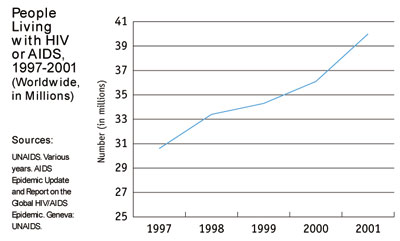
CHART (4A)
(Printed with permission)
WOMEN’S REPRODUCTIVE RIGHTS AND CHILDREN’S RIGHTS: The United Nations unanimously agreed in 1994 that overpopulation is the major problem facing the world. However, they pointed out that this cannot be solved without addressing women and children’s rights. In a world where unwanted pregnancies threaten the life of the mother, steal food from the children already here, impose nations' expenses for their sustenance that they cannot afford, it is unconscionable to deny an abortion to the woman who wants to undergo said procedure under safe and legal conditions.
Hunger forces some parents to use and abuse their children. In some, poverty, lack of education and women’s rights as well as worldly pressures brings out machismo or abusive male control. Here are some examples of what violations are done to women and children as mentioned by the UN:
COMMON VIOLATIONS:
1) About 60 million girls are” missing" mostly in Asia, as a result of sex-selective abortions, infanticide or neglect.
2) Domestic violence is a frequent cause of suicides among women.
3) Rape and other forms of sexual violence are increasing. Many rapes go unreported because of the stigma— less than 3 % in South Africa to about 16 % in the USA report due to shame.
4) Two million girls worldwide between ages 5 and 15 enter in the commercial sex market per year.
5) At least 130 million women have been forced to undergo female genital mutilation.
6) The majority of battered women worldwide are afraid of using contraceptives for fear of spousal retaliation.
7) Malnutrition contributes to more than half of children’s deaths worldwide.
8) 70% child labor is in subsistence agriculture. (2002)
9) 211 million, i.e. 1/6 the of the world’s children under age 15 works.
10) About 8.4 million children are in the worst forms of child labor: bonded labor, military service, and drug trafficking and the sex industry. Most common, especially in Asia, is forced and bonded labor. In the developed world and Latin America, the most prevalent is the sex industry.
1-6 data from: http://www.unfpa.org/swp/2000/english/ch03.html
7 data from: http://www.basics.org/pdf/MCM-English.pdf
8-10 Data from: The International Labor Organization's 2002 report (ref G) and (ref H)
One in four maternal deaths could be prevented by family planning according to the US Center of Disease Control. Maternal mortality from abortion is low in developed countries, where the procedure is legal (0.2-1.2 deaths per 100,000 abortions). In developing regions where abortion is illegal or highly restricted, abortion mortality is hundreds of times higher than in countries where these are legal (330 deaths per 100,000 abortions see Chart 5A). The high mortality is due to “unsafe” abortions. The World Health Organization defines "unsafe abortion" as a procedure for terminating an unwanted pregnancy that is performed by a person lacking the necessary skills or in an environment lacking minimal medical standards, or both. Almost 20 million unsafe abortions occur each year (ref H).
PERINATAL CARE: Pre and post partum infant and mother care is most important for their health and well being, not to speak of the welfare for others in the family, which overall influences the national spirit. Now young girls are getting infected with HIV and becoming mothers before reaching biological and social maturation. Perinatal care includes finding and making available effective methods for dual protection - from HIV and other sexually transmitted infections and from unwanted pregnancy. Dr. G. Brundtal, director of the World Health Organization mentioned in 2002: “There were between 6 to 8 million perinatal deaths yearly. This can be greatly reduced by implementing basic reproductive health approaches, including family planning, adequate diet, prevention and management of maternal infections. Alleviation of hunger and malnutrition is a fundamental pre-requisite for poverty reduction and sustainable development. More than 570 million of the world's women suffer from anemia that complicates pregnancy and affects infants too. Under-nutrition in-utero permanently increases the risks of heart disease and stroke in adult life. Improving nutrition of the whole family is important. Long-term effects of fetal under-nutrition could be a drawback that will be carried forward through several generations. Iodine is one such example. It is the main single cause of preventable brain damage , goiter and vision loss. By adding iodine to salt, we eliminate the problem” (95).
CONTRACEPTIVES: There are various forms of contraceptive methods; none are 100% successful or safe. Enclosed are summaries of how various of these methods compare ( chart 6A)
A) NATURAL FAMILY PLANNING: For religious or medical reasons, some choose not to use contraceptives or barrier methods for contraception but prefer these methods, called “the Rhythm”, symptom-thermal (Billings Method) and Calendar requiring periodic abstinence. These have the highest incidence of pregnancy, as shown in the chart below. The basic concept of these methods is that since healthy women have regular cycles, and ovulation takes place during mid cycle, abstinence during a 10 or more consecutive day period during mid-cycle, will reduce the chances of unwanted pregnancy. Day one starts when menstruation starts, mid-cycle is usually around day 14 in a 28 day cycle. In other words, abstinence has to be observed from day 10 through day 19 in a 28 regular menstrual cycling women. Some women, however, have shorter or longer cycles, thus the calculation must shorten or lengthen the days of abstinence based on this fact. If the woman is not regular, is ill or travels far, this will not work as cycles alter under these circumstances.
B) BREAST FEEDING: Nursing mothers are protected from pregnancy during the first 3-6 moths after delivery. Breast feeding, to work as a contraceptive method, must be done by healthy women in an uninterrupted fashion, provided no other food or liquid supplements are given to the infant and maternal milk is not to be given from a bottle according to Journal Contraception, 1994. Maternal diet, no matter how poor, will not diminish natural milk's nourishment. Baby food companies discredit mother's milk because of economic interest. Nothing in nature is as healthy as breast milk. Breast-feeding decreases maternal breast cancer and strengthens the mother child bond and improves the child's immune system as well as its psyche. for further reference read http://www.lalecheleague.org
C) MEDICAL CONTRACEPTIVES: Since the advent of condoms and birth control pills, millions of unwanted pregnancies and abortions have been avoided. There are more efficacious methods now. For example: Norplant, a contraceptive capsule implanted in the skin, delivers a constant hormonal dose for a period of five years. It can be removed with a small incision at any time, and will not damage reproductive ability of the user. The “patch” type of transdermal adhesive contraception is popular. However, it stigmatizes the user and often falls off with repeated washings. The July, 2003 issue of Journal Contraception mentions that for adult women, the IUD Copper T and Merina hormone-releasing intrauterine device are less expensive and more effective than birth control pills, spermicidal, and diaphragms according to James Trussell, PhD, a Princeton University economist and director of the school's Office of Population Research. Merina and IUD Copper T are about 99% effective in preventing pregnancies. According to the Journal of the American Medical Association, The IUD Copper T remains effective for up to ten years and the Merina 5 years. Professor Creinin, an Obstetrics and Gynecologist at the University of Pittsburgh School of Medicine and director of its Family Planning and Research division, mentions: “IUDs are incredibly safe, incredibly effective, and easy to use. They are extremely popular in other countries, but not widely used in the U.S. This is likely because in the USA only about 20% of insurance companies cover their costs”. Tubal ligation is irreversible and at times can produce adhesions. Professor Trussel calculates that the USA spends $13 billion per year for handling unwanted pregnancies alone.No figures are available of what the cost would be for the impact of these births after infancy on society. Often these children are unwanted, and born into families with poor incomes where there is no time for them. Some of these children, because of this, end up in institutions, have health problems, face poor education, end up on drugs, have psychological problems, face the wrong side of law, end up in a life of crime and/or jail. If one calculated these costs, in light that the planet that is running out of resources, not to teach sex education and withhold assistance in family planning is unethical (87).
D) Morning After Pill method is recommended by the American College of Obstetricians in case of emergency when no contraceptive methods had been used. This decreases between 75-89 % of pregnancies. Of these, Preven and Plan “B” are the most popular in the USA. These pills require a prescription. They must be taken as soon as possible, no later than 72 hours after unprotected sex, and again 12 hours after the first set of pills. Another emergency method is to take 2 regular birth control pills within the first 72hrs, and again two more 12 hrs after the first set of pills. Repeated use of emergency contraception is not advised, for it will upset the normal hormonal cycle of the user since it provides a sudden surge of hormones.
There was interest to determine if availability of the “morning after pills” would encourage promiscuity. The January, 5 issue of the Journal of the American Medical Association mentions a trial that included more than 2,100 women aged 15 to 24 found essentially the same rates of contraceptive use, sexually transmitted infections, and pregnancies among those who were given a supply of the pill to take as needed, those who could get it directly from a pharmacy, and those who had to go to a clinic, proving that ready availability is not impacting sexual mores (87).
SUMMARY OF CONTRACEPTIVE EFFICACY 2004
% OF UNINTENDED PREGNANCIES
PER YEAR USA
CHART 6A
(Printed with permission)
|
|
Source: Trussell
J. Contraceptive efficacy. Contraceptive Technology:
Eighteenth Revised Edition, Ardent Media, 2004 and
other pharmacological and surgical sources. |
CONTRACEPTIVES: ECONOMIC IMPACTS: Planned Parenthood of America reports that for each dollar of government subsidy for birth control, it saves $11.10 in other medical and welfare costs. The savings do not include calculations for later live medical, educational and nutritional costs that arise from unwanted pregnancies or the ancillary social needs of numbers of children as they mature. In the USA only about 20% of health insurers cover the cost of birth control pills and other contraceptives, thus aggravating the population explosion. See reference:(ref O) and (ref P)
THE ETHICS OF WOMEN, and CHILDREN'S RIGHTS:
In 2002, the president of the World Health Organization, when
speaking about the welfare of women and children said: “There
is no room for complacency. There are urgent tasks
but it only works when the commitment comes from the
president or prime minister. The whole country must
be able to speak openly about the danger, the causes and
the solution. Lack of open discussion and laws not
providing protection for reproductive rights are not only
unethical and a breach of basic human rights, but
also lead to serious social and health problems for
societies. We must assist our colleagues in such
countries so that they do not become unwitting or coerced
accomplices to such practices. These services are among
the essential services of the minimal health system of every
country.” It includes finding and making available the
effective methods for dual protection - from HIV and other
sexually transmitted infections and from unwanted
pregnancy”. Contrary to this goal, in 2002, the US
Government, however, announced a $15 billion package to fight
AIDS, requiring that these funds be given so long as AIDS
clinics are separated from family planning clinics.
Stand alone AIDS clinics could cause public shunning to many
for the community would now know who is seeking AIDS
help. In the past, this was provided by healthcare
facilities, where all reproductive, and prenatal needs were
given, so one would not stand out in the crowd. This
idea thus deters many from visiting these facilities, which is
medically unethical (Activities since 2000).
The white house cut funding for family planning earmarked by
congress to the United Nations’ Fund for Population
Activities in 2000. The UNFPA estimates that the
withheld funds could have helped prevent as many as 2
million unwanted pregnancies and nearly 800,000 abortions;
4,700 maternal deaths and over 77,000 infant and child
deaths in many countries. The funds could also have
been used to scale up promising maternal health and
HIV-prevention efforts. If we do not make health, sex
education and family planning a priority, we might end up
like China that waited too long, and now forces its people
to limit families to only one child per family in order to
avoid starvation. The present devastation in Niger
shows how lack of family planning is causing millions to
flee their land, and starve to death. To see the impact of
withholding sex educations in schools, we see how this is
causing an alarming rate of sexually transmitted diseases,
unwanted pregnancies and abortions in the USA (See above
discussions in various fields related to reproductive and
sexual mores and charts A1,A2,A3,A4).
ENERGY and POLITICS . Without energy, civilization as we know it
would stop to a stand still causing chaos and economic
havoc. This fact was emphasized during the October
symposium on energy and the environment by the University of
Michigan in October, 2002. For example, England on
September 15, 2000, after cutting off petrol at the pumps
for three (3) days, went into a total economic and social
arrest. (See the ECONOMIST magazine
,September 15, 2000 or (107). It is because of scenarios like these that
we devote so much emphasis to this chapter. Affordable, replenishable and environmentally safe
fuel is paramount for economic stability and prosperity for
all nations. This is one of the biggest challenges for
the future of civilization, aside from overpopulation and
environmental degradation.
Humanity flourished with the advent of antibiotics,
vaccines, and by the industrial revolution (see graph in our
home page: http://www.lifewatchgroup.org/). The latter, fueled by
coal, oil and hydroelectric power has caused mankind to be
addicted to energy. Now oil’s availability has peaked
and shortly will be dwindling rapidly causing economic
dislocations (30, 31). The keynote
speaker in his address to the National Energy Technology Lab
of the US Department of Energy on February, 2005 said:
"Liquid fuel prices and price volatility will dramatically
and without timely mitigation affect the economic, social,
and political costs to unprecedented levels.
Viable mitigation options exist on both the supply and
demand sides, but to have substantial impact, they must be
initiated more than a decade in advance of peaking.”
Unfortunately, since no steps have been taken to mitigate
this, time is not on our side. The reason is
political. The fossil fuel industry is the most
powerful political machinery affecting world policies
today. It is against their interest to warn us of
impending shortages, to encourage conservation or to use
alternate fuels. President Jimmy Carter tried to take
our economy toward fuel conservation and oil independence,
and in so doing, paid the price by being maneuvered out
office. The Journal Science (December,
1972) confirms his ideas when it calculates that if we
would cut our energy consumption by ¼ we would not have
any significant changes in life-style. This,
however, would not be popular with the coal or oil cartels.
The world is hostage to the oil industries. The threat of another Arab oil embargo can bring the world economy to a standstill if the oil supply is cut off, even for a few days: This sort of vulnerability is unacceptable. The oil and coal industry have powerful economic connections with politicians, who would not dare upset this most rewarding relationship. Therefore, no significant steps to encourage the establishment of policies that make alternative fuels price competitive are under way. This is ever more pronounced in the case of the use of nuclear energy. Fossil fuel industry’s propaganda against nuclear energy is shrill and well orchestrated (see: Politics of Nuclear Fuel in this page). If we realize the staggering cost in health, military security and subsidies our oil dependence is costing, we would realize how costly this dependence is to our economies. If we, however, would discourage subsidies for the oil industry and divert the subsidy funds for alternative fuels, these would become competitive, would break our oil dependence and diminish our concern from Arab or terrorist control that could cut off our fossil fuel supplies. If we input these calculations and subtract the cost that our health and environmental degradation fossil fuels cost our world, we would realize that our current political path is against our national interest. But since the politicians are being economically and politically rewarded to keep the status-quo, the voters are the losers.
The economic impact of the OPEC is enormous. It has received about $7 trillion USD from the USA’s consumers alone in the last 30 years by keeping the oil prices above their true value ( The Economist Magazine October, 2003). If we add the cost of the recent Afghan and Iraqi wars, this adds 208 billion and the worldwide annual cost from global warming is and additional annual $300 billion plus countless other additional costs that this industry brings from health effects, oil spills, acid rain, etc. These sums do not include the price of US military presence to protect the oil producing countries in that span of time or the sums from subsidies (data. from figures calculated by the US congress), and the global losses in crops, diseases, and pollution that fossil fuels are causing; the sums are staggering (32).
China’s National Environmental Protection Agency (NEPA) recently released a report that shows China has annual losses of $13 billion USD due to acid rain alone. Dr. Rowland, a member of the National Academy of Sciences and the American Academy of Arts and Sciences and Noble Laureate calculates that China, alone, will have to spend $90 billion USD to curb acid rain.(33).
The most serious impact of our fossil fuel dependence is the price in human lives, health and environmental damage (34). A University of Michigan report shows the present exponential increase in human deaths caused by fossil fuel pollution and points out that: the by-products that form from the burning of fossil fuels can exist in the air for indefinite periods of time. They can enter the blood stream, irritating the lungs and carry with them toxic substances such as heavy metals and pollutants. Over a lifetime of continued exposure, those affected could become afflicted with fatal asthma attacks and other serious lung conditions. The World Resources Institute reports that between the years of 2000 and 2020, 8 million additional deaths worldwide will occur due to this impact if we fail to change our present conditions. In 1990 alone, respiratory diseases were a leading cause of disabilities and illnesses worldwide. Because the contamination is growing at an exponential rate, minor reductions now will greatly reduce the number of lives lost in the future.(35).
In the 2004 Journal Nature, Thomas et al, in the largest multinational work regarding global warming caused by fossil fuel use, reports that the predicted range of climate change by 2050 will place 15 to 35 percent of the 1,103 species studied at risk of extinction, and that when extrapolated globally, they conclude that more than a million species will face extinction. Countless dollars are lost due to environmental damage caused by global warning worldwide. The rising number of weather related diseases is charted by the US Environmental Protection Agency. (36). To add up all the economic losses caused by exponential population growth, its fuel consumption, and our poor planning to address climatic changes, the figures will add up to trillions of dollars, something that politicians choose to ignore.
Not long ago, government and tobacco lobbyists were colluding in the pretense that there was no real scientific proof that tobacco caused illness and death. The leadership of the US Surgeon General Dr. C. Everett Koop finally exposed this truth and tobacco companies have been the subject of countless suits for hiding the truth. The fossil fuel industry follows the same tactics as tobacco companies, making allegations that global warming is not a real factor and that the losses are unrelated to fuel emissions. Already, EPA Director Whitman, during the Bush administration, is now being sued by the state of Massachusetts for ignoring the clean air act while she held office. This is the beginning of such awareness that is slowly coming to light and we predict that the industries that do no heed the clean air and water standards will suffer the same fate as tobacco companies. The Prayer of this suit states: “By so violating Section 304(ref a)(2) of the Clean Air Act, 42 U.S.C. § 7604(ref a)(2), EPA is unlawfully increasing the likelihood of harming the economic interests of the Plaintiff States ( Massachusetts), is unlawfully increasing the likelihood and severity of damage to property owned by each of the Plaintiff States, is unlawfully denying residents of each of the Plaintiff States the benefits due them under the federal Clean Air Act, and is unlawfully subjecting residents of each of the Plaintiff States to increased risks of harm to human health, welfare, and general economy that are associated with the continued unregulated emissions of carbon dioxide” (37).
The damages fossil fuels have brought
reflected by global warming has caused great damage to us
and to many species. The damage is already irreparable for
some species that have become extinct, and many will follow
by the time we switch to alternate energies. In our
chapter on the politics of fossil fuels and nuclear energy,
one will see why admitting the fact that there is indeed
global warming is not popular among the fossil fuel
companies, as it will negatively affect their earnings. This
is one of the reasons that the USA reneged on the Kyoto
Accord to curb air and water pollution (63).
I) FOSSIL FUELS: Exponential population growth and unchecked fossil fuel use is causing global warming. Fossil fuel, a finite sources of energy, is rapidly dwindling. WE HOWEVER WILL RUN OUT OF ENVIRNOMENT BEFORE WE RUN OUT OF FOSSIL FUELS as per the reports from the University of Michigan. Worldwide, 40% of all energy comes from oil, 26% from coal and 24% from natural gas. Saudi Arabia and four of its neighbors provide 2/3 of all oil supplies. Because oil is dwindling, this is causing us to turn to the more plentiful natural gas now being used by about 90% of all new power plants in the U.S. In addition, Big Oil is looking to hydrogen as the next major fuel source. Hydrogen can be made from a number of raw materials, but the cheapest is to make it from natural gas. The problem is that supplies of natural gas in the lower 48 states have been declining since 1976, when gas production in the U.S. reached its Hubert’s Peak. This fact and the USA’s lack of infrastructure to import sufficient natural gas from abroad is reflecting dramatic price hikes, according to R Hirsch: Peaking of World Oil Production: Impacts, Mitigation, & Risk Management.
The fragility of our economy is such that now that we do not have the 10 years advance notice to restructure our fuel needs, we urgently must encourage conservation and plan for alternative fuel supplies. In spite of these facts, there is no political will to face the problems, and sometimes, politicians misinform us about the facts. Alan Greenspan, the Chairman of the US Federal Reserve Bank, worried in June, 2003 that price spikes in natural gas prices could wipe out any economic recovery in the U.S. On April 27th, 2005 Greenspan urged more access to natural gas, insinuating that there are vast untapped worldwide supplies, something that is misleading. (38).
(A) PETROLEUM, NATURAL GAS and HOW MUCH IS LEFT?: In 1994 the University of Colorado correctly reported that the USA would run out of oil in about 15 years, gas in 30 years and coal in 200 years at the present and future rate of consumption. This report takes into account the future population growth and that 58% of supplemental oil is imported. According to the US Energy Information Administration’s 1995 Report, all the world's oil reserves will be exhausted within 43 years, gas within 66 years and coal within 150-235 years at the expected rate of the population’s increasing demands. These reports take into account fossil fuel already discovered and yet to be discovered. These figures seemed unreal but they have now proven to be true. The latter data has also been confirmed by OPEC, OECD and British Petroleum. See charts (D and E). In a July, 2000 article of the Journal Science, Kerr mentions that a new 5-year assessment of the store of oil bodes ill for the United States.
The graph(D) below (reference of the "Hubert Curve,") is based on an Ultimate Recovery of conventional oil of 1750 GB (Giga = Billion barrels) and depicts alternative scenarios of production. The Swing Case assumes a price leap when the share of world production from a few Middle East countries reaches 30%. This is expected to curb demand, leading to a plateau of output until the Swing countries reach the midpoint of their depletion when resource constraints force down output at the then depleted rate. [From The Twenty First Centuries, the World's Endowment of Conventional Oil and its Depletion, by Dr. Colin Campbell, 1996] In the 2000 meeting of the Energy Institute of the Americas in Oklahoma, M. Simmons admitted: “We have an Energy Crisis as too many key parts of the world have run out of the ability to increase electricity demand, natural gas demand and petroleum demand. All three prime sources of energy converged into a limit against further growth almost simultaneously” (41).
 |
(GRAPH D) Hubbert Peak Curve (Printed with permission) |
|
(10, 12) and Graph E,
(39, 40) (Printed with permission) |


Facing high gas prices at the pump makes many think that this is a political manipulation by Big Oil and that soon the prices will go down. In 2004 some voters cast for continuation of our war in Iraq hoping this would bring oil prices down. According to the results of a study by the London-based Oil Depletion Analysis Centre (ODAC), the growing oil demand and dwindling oil supplies are the real cause of rising prices. The enclosed graph (D), courtesy of Hubbert Peak will help understand the dynamics of oil production, prices and availability taking into mind the growing consumption of known and untapped fossil fuel sources. As oil production drops, natural gas is gaining popularity since it is cheaper than gasoline and propane and is relatively environmentally friendly. A natural gas vehicle may cost slightly more than the non-NGV version. Canada offers grants and rebates that allow offsetting for the vehicles’ prices. The fuel costs show immediate savings. These vehicles require less frequent maintenance due to cleaner burning fuel. Nevertheless, this still has a negative environmental impact due to CO2 emission (42).
The question, however, is not really whether we have or do not have oil to burn. The question is what oil is doing to our health, environment, and economy, for we will run out of environment before we run out of fossil fuels. This was emphasized during the symposium on energy and the environment presented in October, 2002 by the University of Michigan. In July, 2005 the G 8 Summit had all members, except for the USA, agreed that global warming and the Kyoto accord are urgent in their agenda. However, the current US administration keeps refusing to see the implications of postponing the addressing of this problem of clean air and water that the Kyoto accord requires. Contrary to these facts, the US Senate voted to allow drilling in the Alaska natural park as a “remedy” to increase its own oil supplies, perpetuating our oil dependence instead of legislating conservation and alternate fuels. The Alaskan wells will take over 10 years to reach production and will produce about 2 years of the USA’s present consumption of oil supply, according to the May, 2005 issue of Scientific American. If however we opted for fuel efficiency, it has been calculated that improving gas efficiency by 3 gallons per mile, the US would save PER DAY what the Alaska oil field would produce in its entire peak year, something our leaders do not want to encourage.(43).
(B) COAL Coal fueled the industrial revolution transforming our civilization forever. Coal is the world’s most plentiful cheap source of fossil energy, but it is dirty. About 56% of the US electricity is coal generated and more so worldwide. Coal plants, according to the National Council on Radiation Protection and (NCRP) Reports No. 92 and No. 95 show that the radioactive exposure’s effective dose equivalent from coal plants is 100 times that from nuclear plants. Coal combustion emits not only uranium and thorium but also radium, radon, polonium, bismuth, and lead. Also, radioactive potassium-40, mercury, arsenic, silicon, calcium, chlorine, lead, sodium, plus aluminum, iron, lead, magnesium, titanium, boron, chromium and others are continually dispersed into millions of tons of coal combustion by air and water, causing disease and death. According to the (NCRP), the average radioactivity per short ton of coal is 17,100 millicuries/4,000,000 tons, i.e., for example, in 1982 the total release of radioactivity from 154 coal plants in the United States was 2,630,230 millicuries. Extrapolating these calculations worldwide, the projections from 1937 through 2040 can be determined to have a release of radioactivity 2,721,736,430 millicuries! (44) Although not a fair comparison, one could calculate that this sum of radioactivity would represent 1.3 atomic bombs per year or 135 atomic bombs in that period of time (Hiroshima-type 20,000 ton atomic bomb based on a study performed for a hypothetical global nuclear war (P.R. Ehrlich, et. al., “Long-Term Biological Consequences of Nuclear War”, Journal Science, 222, 1293 (1983)
Fossil fuel emissions are also changing weather patterns, causing more numerous hurricanes, tornadoes, floods, forest fires, and mud slides, increasing global temperatures that are, in turn, causing desertification and altering habitats. According to Professor B. Cohen of the University of Pittsburgh, coal plant emissions are responsible for about 100,000 deaths a year (45).
Coal mining requires vast land excavation, thus causing ecological disruption. There have been no incentives for coal companies to maximize their efficiency. Studies show that they can be optimizing their efficiency up to a maximum of 8%. New “clean coal emission” technology that captures CO2 emissions, controlling mercury and radioactive materials are slowly being implemented. Since this is costly, many will not implement these regulations, especially in third world countries. In order to impose emission reduction we must impose tariffs to their products to offset our cost of our national pollution control. Not doing so will encourage their pollution and makes for unfair competition. To expect other countries to adhere to the Kyoto Protocol to curb greenhouse gases is difficult for the USA because, as President Bush said in a 2001 speech: “For America, complying with those mandates would have a negative economic impact, with layoffs of workers and price increases”. So, in other words, he said NO to clean air and no to clean water as per the Kyoto Protocol. The USA refuses to accept the big picture and shrugs off our debilitating oil dependence at the cost of its national security, its health and economy. The losers are mankind and the environment.
(II) HYDROELECTRIC POWER: About 25% of the world’s energy needs are supplied by hydroelectric power and growing since it is economical and “clean”. The USA relies on 11% of its needs from this source. If we weigh the real impact of hydroelectric power, however, we realize that harnessing rivers upsets the ecosystem and destroys the flooded land. For example, Egypt's Aswan Dam studies reported in the Journal Science, April, l988, that conservatively, within eighty years from now the dam's effect will cause the sea level to rise about one meter, leaving the delta region submerged within 30 Km off the coast. The dam is trapping its silt, causing impoverished crops with negative long term impact on their agriculture. The dam brought a higher standard of living to Egypt for now, as well as a more controlled irrigation but its long term effects are negatively impacting the entire region due to its environmental destruction. Hydroelectric use is so popular that man’s redistribution of natural water sources is affecting even our orbit’s gyrations!! (Smithsonian Institute) (46)
A) Tidal Energy: Few countries that have large tidal surges have harnessed hydroelectric power with turbines successfully. This is environmentally clean and economic, but unfortunately very few nations have such wide tidal surges worth harnessing.
B) Ocean Wave Power can be an endless source of power. A company called Power Buoy advertises that it has equipment whose total operating cost of generating power from an OPT wave power station is projected to be only (US) 3-4¢/ kWh for 100MW systems and (US) 7-10¢/kWh for 1MW plants, including maintenance and operating expenses, as well as the amortized capital cost of the equipment. It is currently working in New Jersey, USA. Other companies are making progress in this arena but it is uncertain, if indeed, they will be able to bridge the gap of fossil fuels and exactly what their impact on the environment will be as miles of shore will be occupied for this process(47).
III) NUCLEAR: Currently, most electricity in the US comes from coal and nuclear power. All nations who presently have nuclear facilities produce nuclear fuel from specialized reactors where plutonium is irradiated, thus allowing for an infinite source of nuclear fuel. In order to meet the requisites established by the Kyoto accord on clean emissions, M Stewart, President of the Canadian Nuclear Association, extols the virtues of atomic energy as a source of clean energy that will make it possible to fulfill the agreements established during the Kyoto accord (48.49).The same conclusions have been pointed out during the October symposium on energy during the 2002 October meeting at the University of Michigan When weighing the dangers of fossil fuels and hydroelectric, atomic generated power is the safer, cleaner and cheaper choice and is not subject to political Arab whims. Another benefit is that Nuclear Power's ability to replenish itself with breeder reactors will not continue taxing our planet's limited resources. In our chapter on “the politics of Nuclear Power” we explain why mankind is so afraid of nuclear power and how this fear has been planted by fossil producing companies.
All living forms have, through the millennia, adjusted to pollutants and radiation as part of living on earth. The earth’s core has radioactive uranium, the sun emits nuclear particles, and from another aspect, every time we breathe we exhale C02. Every time we wash our hair we pollute etc., etc. However, when we multiply the amounts of pollution caused by daily human activities of 6.3 billion people and to 3 additional billion people that will be born soon, the impact to our planet is beyond the ability of the planet to cleanse itself. The nuclear emissions are insignificant in comparison to all other sources of pollution. Nuclear fuel is also relatively inexpensive and if properly managed, is safe.
The following chart shows samples of nuclear energy price per kilowatt hour, and explains why Japan, the USA and France are its top users. Notice that Japan prefers nuclear even though, there, it is not the cheapest of energy sources because they value their environment.
Some comparative electricity generating cost projections for year 2005-2010
US 1997 cents/kWh, Discount rate 5% for nuclear & coal, 30 year lifetime, 75% load factor.
Source: OECD IEA NEA 1998.
|
1998 |
Nuclear |
Coal |
Natural. Gas |
|||
|
France |
3.22c/kwh |
4.64c/kwh |
4.74c/kwh |
|||
|
Russia |
2.69 |
4.63 |
3.54 |
|||
|
Japan |
5.75 |
5.58 |
7.91 |
|||
|
Korea |
3.07 |
3.44 |
4.25 |
|||
|
Spain |
4.1 |
4.22 |
4.79 |
|||
|
USA |
3.33 |
2.48 |
2.33-2.71 |
|||
|
Canada |
2.47-2.96 |
2.92 |
3 |
|||
|
China |
2.54-3.08 |
3.18 |
- |
|||
|
2005 + |
Nuclear |
Coal |
Gas |
|||
|
France |
1.7-4 c/kWh |
1.9-3c/kWh |
4-6c/kWh |
|||
|
Japan |
7c/kWh |
CHART E |
||||
|
Germany |
2.38c/kWh |
|||||
+The prices on the actual 2005 revision are incorporated in the above chart.The projected chart above was updated in 2005 by a joint report by the Nuclear Energy Agency (OECD) and the International Nuclear Energy Administration.
Part of the improvement in cost efficiency shown in CHART E is due to increased nuclear plant capacity and rising fossil fuel prices. The study did show that nuclear power had increased its competitiveness since 1998. The graph reflects the cost of nuclear plant construction costs ranging from US$ 1000/kW and the most expensive, in Japan, with an international averaged $1500/kW. Coal plants were costed at $1000-1500/kW, and gas plants at $500-1000/kW. The latter, however, did not input the future fossil fuel prices; thus this figure is questionable, not to speak of its sustainability as prices continue to rise. The above chart actually should reflect the following : At 5% discount rate nuclear generating costs come out at EUR 2-4 cents/kWh depending on country, coal 3-5 c/kWh, gas 4-6 c/kWh and wind up around 8 cents. Nuclear is cheaper than gas in all but one case. At a 10% discount rate nuclear ranged 3-5 cents/kWh (except Japan: near 7 cents cheaper than coal in seven of ten countries, and cheaper than gas in all but two countries. The new EPR if built in Germany would deliver power at about 2.38 c/kWh - the lowest cost of any plant in the study (50, 51).
Nuclear Waste: Nuclear waste is a serious concern in the eye of the public and education on the safety of this disposal is most important in order to have public acceptance of this type of energy. The United States’ EPA has a safe, well thought out plan on how to dispose of spent fuels. However, there is no political will to enforce its inception (113). France has a well-established nuclear waste management program that should be copied. In the USA Yucca Mountain has been earmarked as a site for safe disposal of nuclear spent fuels. Unfortunately, due to irrational fear planted in the public’s mind, locals refuse to accept this. In the meantime, 43 states’ spent fuels keep piling up in populated areas where the nuclear plants are – a dangerous situation for communities for their storage is not as safe as it ought to be and they are reaching their space limits. The public must put pressure on its representatives to send nuclear wastes to Yucca Mountain where it well be handled safely (110). In order to make nuclear waste safe, it has to be vitrified and contained in shields for safe disposal, a process that is well known and mature.
Regarding the 600 Megawatt electric and 1,400 Megawatt thermal nuclear reactors; they have nuclear cores that, under no circumstances, would a Chernobyl-like meltdown ever take place. Their size and core design also ensure that they cannot physically contaminate the environment even if an accident would occur. The nuclear wastes are, as mentioned before, later vitrified and contained in shields for safe disposal. The USA has about a 300-year supply of Uranium 238 already processed that can be successfully used for nuclear breeder reactors, as done in France. Breeder reactors are 25% more expensive in their outlay to produce them. Full size reactors, although more expensive to build than medium-sized ones, pay off in the long run as these reactors are less expensive to operate.
Politics of Nuclear Power: It is our perception that fears of atomic power have been planted by oil companies and politicians with vested interests who do not want alternative fuels, or nuclear to interfere in their fossil fuels investments. Japan, the victim of the atom bombs of Hiroshima and Nagasaki, is one of the greatest users of nuclear energy – because they do not have oil they are not pressured by political oil interest groups and not because it is a masochist society. Japan knows that nuclear plants, when properly managed, are safe, clean, economical and are not subject to control by foreign powers. Japan is one of the strongest world economic superpowers in spite of its small size, due to good governance and sound energy policies (52).
Fossil fuel companies use scare tactics in order to control world perception against nuclear energy, its serious competitor. The Chernobyl nuclear plant accident has been used as an example of how “dangerous” nuclear power is. The Chernobyl disaster was the only accident in the history of commercial nuclear power where radiation-related fatalities occurred. It killed 30 people, including 28 from radiation exposure. According to the Uranium Information Centre of Melbourne, Australia, it reports that the Chernobyl disaster caused an additional 209 radiation exposure reactions, of which, 134 cases were confirmed (all of whom recovered). Nobody off-site suffered from acute radiation effects. However, large areas of Belarus, the Ukraine, Russia and beyond were contaminated in varying degrees but no additional deaths related to this have been reported to date. A comprehensive report taking up to 10 years since this accident occurred, can be viewed in the enclosed page: (53) and a report of 1995 by the World Health Organization in Geneva concurs with these findings. Thyroid cancer, as a result from this accident, representing 0.01% of the total exposed population, has been cured, as this type of cancer is curable (108). To put things into perspective, the annual US death rate caused by motor vehicle accidents are about 42,000. The world’s death rate due to motor vehicles is far greater when added up. Automobile accidental deaths are much more deadly than any nuclear accident, however, we would never consider banning vehicles in spite of their deadly impact (54). The annual cost for traffic fatalities in the USA alone is $ 230 billion dollars, not to mention the emotional damage these cause (109) and as another example, according to Professor B. Cohen of the University of Pittsburgh, coal plant emissions are responsible for about 100,000 deaths a year (45); Indoor air pollution accounts for 1.8 to 2.7 million annual global deaths. All data proves that nuclear fear is due to fossil fuel companies' propaganda and not due to scientific facts.
Nuclear generators can provide electricity for factories, engines and electric motor vehicles. This will solve most energy and pollution problems. Research and incentives for shifting from fossil fuels to atomic generators must be implemented; however, there is little political will to do so. Presently, electric cars that can go at 80 miles per hour for 120 miles at one sitting are available. The acceleration rate is comparable to gas fueled cars, while non-polluting and very quiet. Electric cars available in the market, produced by various car manufacturers, range in cost with an average of about $20,000 dollars with clean air tax abatements. The US Department of Energy and EPA estimate these to run at an annual electrical cost of about $420 while gas powered cars have an estimated annual cost of $696 with present fossil fuel costs. If the demand grows and nuclear plants produce the electricity, their prices will decrease. Hybrid cars are on the rise, but their small size discourages the US market as long distances and large trucks frighten drivers and large frame vehicles are thus preferred. The impact on high fuel costs will change this situation shortly, however, as mass transportation and urban city dwelling will be in vogue soon.
The economic burden of phasing out from fossil energy to alternate fuels will not be as costly if the subsidies to the fossil fuel companies are also phased out and finally suspended and these funds are given as ABATEMENTS for using alternate fuels to promote research and development to bring down costs. The USA expense for the Afghan and Iraqi wars for oil control ($208 billion in 3 years) could have best been used for promoting better US Arab relations that would ease terrorist threats, investing in family planning and curbing global warming with much better results.
Nuclear Proliferation: Adrien Guelke and Brian Jenkins, two terrorism experts, separately point out that there is no evidence that any terrorist organization ever attempted to purchase a nuclear weapon, besides, to deploy a nuclear bomb is tactically complicated, way beyond any of the terrorist's organizations means. It is because of this that terrorist attacks limit themselves to car bombs (117). Since the atomic bombs of Hiroshima and Nagasaki no more world wars have taken place. Realistically, nuclear bombs have proven to be the best deterrent against nuclear war.
The argument that small nations will provide nuclear bombs to terrorists, and therefore such nations must not have nuclear plants, is a political manipulation of the facts. Fear against nuclear proliferation is used as a ploy to prevent nations from becoming independent from fossil fuels. If nuclear was so dangerous, then how is it that Japan, who during WWII suffered the atomic blasts, is one of the largest users of nuclear power? It is because it is safe and economical.
To avoid nuclear proliferation International laws must be enforced so that countries obtaining nuclear fuel for their plants from countries with nuclear processors must be accountable for their spent fuel for reprocessing to encourage recycling and avoid mishandling of wastes. This, not because of fear of them selling the fuel to terrorists, but in order to assure they are careful not to mishandle the fuels and pollute the environment. Not cooperating with accountability of their nuclear material must be legislated as cause for closing the plants down under international rules.
To avoid proliferation of surplus plutonium, immobilization is the only technology that could be used. Surplus plutonium must be treated as waste and has to be available for international inspection, such as by the International Atomic Energy Association (IAEA). Instead of going forward with MOX option, the U.S. Government should: ensure safe, long-term storage of plutonium as the highest priority under international controls for ready inspection and regulation (116).
Worldwide political pressure must demand that world powers lift bans for obtaining loans for nuclear power to ensure all nations the right to economic independence by way of nuclear power. An international nuclear regulatory commission should have vast nuclear power worldwide and make all countries accountable to international laws.
IV) Electric: As shown below, our world is lit by electricity, however due to poverty and lack of infrastructure, about 50% of humanity lacks electricity. The photo below taken at night, by virtue of the lights, shows human population distribution (courtesy of NASA) The photo however is not showing about 60% more people that the planet actually has now. ( If you wish to see in details the beauty of our planet at night, go to our home page photo, push the click button, and see in detail this photo. Use the side arrows to move from one continent to another, sideways or up and down), Electricity is run by hydroelectric, nuclear, coal or gas power. Oil is too expensive, thus no power plant uses this as a source of energy.
 |
Photo D |
The night photo above shows about 40% of the world's population since about 50% of the population has no access to electricity and all lights are not on.
(V) ALTERNATIVE FUELS: Unfortunately, by 2005, no alternative fuel had been able to compete in price with hydro, nuclear or fossil fuel generated energy. Wind is the most competitive, but is still expensive compared to these as shown in Chart F.
|
|
GRAPH F (1 and 2) State of Hawaii, Department of Business, Economic Development & Tourism (55)
1) Wind: Of the renewable energies, this source is the cheapest, therefore it is gaining worldwide acceptance. In 2005, with the latest equipment Hawaii is producing it at 4 cents per kWh—establishing wind energy as a power source that is now more affordable than natural gas. (56). Harnessing wind power creates ugly landscapes and is idle over 25% of the time depending on the location, due to damaged blades, turbulence, is difficult to store and, when idle, alternate sources of energy are needed. This energy has proven to be destructive to birds. In order to provide sufficient energy for large communities, large areas of land need to be utilized. In Europe, citizens are signing petitions to have these wind plants removed due to all of the above reasons. In time, protective barriers will solve the problems as we can ill afford fossils (57).
2) Shale oil: Shale is a fossil fuel and causes the same ill effects as all other such fuels. It is costly and requires massive amounts of water for its extraction causing polluting debris and landscape destruction. Canada had curtailed extraction to a great extent because of these reasons (58).
3) Gasohol: Gasohol, a mixture of 10 % ethanol and 90 % regular petrol, is being promoted as a cheaper, more environmentally friendly fuel. FTI vice-chairman, Ninnart Chaithirapinyo, of Thailand says it (Thailand) will phase out petrol and replace it with gasohol by 2006. The “friendly environmental” use of gasohol is elusive and raises an ethical dilemma: If we were to turn to gasohol for our energy needs, most forests would have to be cut down in order to make room to cultivate corn, sugarcane and beets that produces this fuel and in so doin we would be further destroying the ecology, causing soil erosion and decimation of biodiversity. If we fall short of providing enough grain for people to eat, how can we justify “feeding” our engines while people starve? And, where are we going to find the soil to cultivate enough gasohol to fuel all our energy needs? Gasohol is inefficient since it must be supplemented by fossil fuel that accumulates.
4) Solar: We all hope to see a way to use solar technology , but to date, this has proven to be too costly, thus making this impractical for our vast needs The down side of solar also, is unpredictable and is expensive to store and install. Solar nano-technology is showing that, by means of sprays for roofs and walls of outer building wall applications that it will capture solar energy, thus diminishing use of other energies. Unfortunately, this is about 20 years behind in development and expensive. Subsidies for fossil fuel generation make alternate fuels less economical. Even if these subsides were lifted, solar is still not economic. Due to its poor portability, down-time alternate fossil fuels needed to pick up during their down-time, add to global warming (59).
The best contribution of solar, to date, is in thermal water surface heating. Average costs depend on sunny to cloudy regions; vary from the least at 8 cents/Kwh to 12 cents/Kwh. In order to run their photovoltaic collectors, toxic material (such as cadmium, arsenic and gallium) are required and these remain toxic forever. Therefore, their disposal is of great concern. Solar reflectors needed to fuel large populations can disrupt air travel, and if misdirected, can cause eye (retinal) burns, Require large land parcels limits their economic yield and the unpredictability of sunshine is not ideal.
(5) Hydrogen: This source of electricity is created by electrolyzing water in order to produce hydrogen and oxygen. Hydrogen-based energy always involves conversion of the methane process or electricity (generated by fossil fuels, nuclear, solar or wind). In the case of water electrolysis, modest advances have been made to produce hydrogen fueled vehicles. This also has been employed to run the hardware of the space shuttle. Utilizing solar cells to power the process is environmentally friendly according to Cooper Union's Professor Hollenberg. However, cars fueled in this fashion hold an apparatus that is heavy. Another source of Hydrogen has been experimented with by using genetically modified organisms. One wonders, if there is exuberant growth of these organisms, and accidents occur, what will their impact be on the environment? There is, however, a great deal of interest in using hydrogen rather than oil as a means of storage and transport of energy. To date, hydrogen is inefficient to produce, expensive to store, transport and convert back to electricity. The Fischer-Tropsch process of creating liquid hydrocarbons is possibly an alternative solution to the liquid transport fuels dilemma, making much better use of the existing distribution and storage infrastructure than hydrogen..
POLAR CAPS, GLOBAL
WARMING AND CLIMATE: In 2010, the US National Academy of
Sciences stated: "There is compelling
comprehensive, and consistent objective
evidence that humans are changing the
climate in ways that threaten our societies
and the ecosystems on which we depend."
Now all reputable organizations agree. We
cite only a few organizations in this list
:
World Health
Organization W. H. O
Journal "SCIENCE"
National Oceanic & Atmospheric
Administration (N.O.A.A)
Journal "Nature"
Intergovernmental Panel Climate Change
I.P.C.C.
International Energy Agency (I.E.A)
World Meteorological Organization (
W.M.O.)
Smithsonian Institute
National Museum of Natural History
NASA Goddard Science & Space Institute
N.A.S.A.
Museo Antropologico de Mexico
Sindicatum Climate Change Fdtn. (S.C.C.F.)
National Geographic Society
WORLD’S TEMPERATURE RISE
NASA’S map shows world temperatures tracked
from 1884 through 2009, an unequivocal rise
in temperatures, which is now
confirmed to be from human activities.
These are due to burning of fossil fuels,
deforestation, global wrming that is melting
polar caps, mountain snow and
glaciers.Prior periods of earth’s
warming and cooling were not due to
human activities. For example, in 2010,
temperature rise in northern Russia
and Alaska caused fires that decimated vast
territories. Each time we breathe, turn on a
light, start an engine ,burn fuels or trees,
CO2 is produced, warming the
atmosphere. Trash, biomass and animals
produce methane, which produce TWENTY times
more heat than CO2. Fertilizers,
refrigerants, and industrial processes emit
nitrous oxide, which cause 300 times more
heating than C02. All add up, causing
environmental changes, harming us all.
The National Research Council of the National Academies reported in 2005 that “global warming” is taking place unequivocally, partially due to human activities, but namely due to fossil fuel emissions and deforestation. The progressive water shortage, decimation of land due to human use and abuse, soil erosion and pollution are causing weather pattern changes. Storms are more frequent and hurricanes are more inclement. Tornadoes, floods, mud slides, and forest fires are adding to the planet’s devastation that will eventually cause the planet to become uninhabitable (62). Global warming can be curbed immediately by conservation, and in the long range, by changing from fossil fuel to wind and nuclear energy and other alternate sources (Details of why we say that nuclear is safe are mentioned in the chapter on energy).
  |
Graph G |
|
(Printed with
permission)
Graph adapted from Climate Change 2001: The Scientific Basis (60) compliments of NASA |
NASA shows a temperature rise of 0.4C in the last 25 years. This small increment has caused many glaciers and huge portions of artic ice to melt. An increment of 5 degrees is expected in the next 150 years! Following is the Rhone glacier in Europe in 2003 as compared to 1850.
|
|

|
Melting glacier in
less than 153 years due to warming.
|
The world community must
declare the polar caps as sanctuaries because their
thermoregulation is life sustaining. Sparing this
habitat will be a priceless investment for our future.
According to the United Nations Environmental Agency report
from Arenday, Norway, it calculates that global temperature
change will cost $300 billion dollars/year in losses
worldwide (64). To open the Tsongas
National Park in Alaska close to the polar caps for oil
drilling, however, would disrupt plant and animal wildlife
with long term repercussions. This additional
pollution to our atmosphere is illogical. The idea of
the World Wildlife Fund, for Sweden and Holland etc., to
purchase national debts of debtor countries in exchange for
assured preservation of natural habitats can be a solution
to the budget deficits of debtor countries, decreasing the
ecological disintegration. Creditor nations must
forgive loans in exchange for a nation's promise to preserve
their wildlife and forests (65).
Climate
change brought about by global warming is causing migration
of species, some plants are disappearing in some zones and
are moving to higher latitudes where climates are
cooler. This shift in climate will also affect
populations and ensue human migrations. In the July,
2005 G8 Meeting, all countries disagreed with President
Bush’s disinterest in upholding the Kyoto Accord, pointing
out to him the seriousness of the progressive deforestation,
water shortages, decimation of land due to human use and the
depletion of food due to demand outpacing supply. This
will cause the planet to become uninhabitable within 100
years unless we address these problems now.
WEALTH, HUNGER AND PEACE: Families, like nations, more often than not become poor due to excessive numbers of children, poor education and poor governments- management. For example, Germany with few children and Uganda with too many, are examples of that spectrum. The ethics of hunger were mentioned earlier and pointed out that hunger is caused mainly by unethical politicians and inept governments. Some claim that food shortages are due to political reasons, which to some extent is now true. Soon, however, it will be due to the planet’s inability to continue sustaining the growing populations, for our demands are far outpacing the planet’s ability to supply our needs.
Hunger causes war, migrations and the de-stabilizing of affluent societies due to the influx of hungry hoards, CNN television is replete of visions of Niger that illustrates this point. History is full of such examples. To ignore other people's hunger is to jeopardize one's own security and wealth. Food and resource shortages will cause internal instability and ultimately drive countries to war. Wars and famine paradoxically cause greater numbers of births, for man overcompensates in crisis; unlike most animal species that halt or decrease reproduction when there are food shortages or stress (66). Mankind resorts to sex because it finds solace in it and is a form of stress relief (67). Children, the innocent by-products, later pay the consequences of their parent's carelessness. The graph compiled by the UN and the international census illustrates this human response after World War I and WW II causing "Baby Boom" explosions (See population graph in our cover page (http://www.lifewatchgroup.org). Robert McNamara, ex-US Secretary of Defense and later, President of the World Bank, points out that "the exponential population growth is so far out of balance that this will impose heavy penalties on individuals as well as nations. Ultimately, this will impose coercive measures of fertility regulation. This can be avoided by increasing knowledge and availability of contraception. If such measures are not made available, the penalties to the poor and nations will be enormous and the ripple effect will inevitably extend to the rich as well".
Wealth is amassed in nations who promote free enterprise. Such examples are Japan, at one end of the spectrum, giving people the greatest economic incentive and companies who give employees a share of the profits, job security and take part of their company's decision-making, increase productivity and insure a sound economy. In his scenario, there is a sense of teamwork and self-worth. It is this spirit that allows companies to survive even through hard times. At the other end of the spectrum is communism where nationalization of industries – the usurpation of business and industries by the government which is what communist Russia did in the last 60 years - is proof of how to destroy an economy. Russia collapsed in bankruptcy, ending its communist ideals. There is a car bumper sticker that says: “If you want the MAFIA to go out of business, have the government run it" because governments are notorious for their poor business sense. Even China has learned to allow free enterprise and is growing into a very powerful economy. Social welfare states such as Sweden keep business in the hands of the people. But, in order to maintain its social -welfare systems, such nations have high taxation, diminishing differences between the rich and poor. This type of government allows for a more egalitarian society. This assures better education, negligible poverty, universal health insurance and a low crime rate, thus creating a sense of national well being - a priceless commodity. The US tax payers have been made believe that taxation is bad for the nation. This notion can be dispelled by the statistics shown in Chart K where three developed countries, Japan, USA and Sweden fare under their political thinking. The charts clearly show how the USA has lost its lead when comparing with the others in the last decades. If a few rich amass the wealth at the expense of the majority, then a country cannot be considered a great nation. The wealth of a nation is measured by a sense of egalitarianism, a sense of true democracy, and social well being. Good governments are measured by their ethics and for doing what is best for the majority. USA Conservatives explain that the USA is in poor shape due to a long line of democratic “liberal” presidents. Both Sweden and Japan are more liberal than the USA. If a liberal government was bad for a nation then why are Sweden and Japan doing better than the USA? One of the reasons is that, in the USA, corporate social interests are being put above the national interests. Wealth in the USA is getting to a narrower few while its poor population is growing and the masses are becoming more and more disenfranchised.
Illustrate these points, CHART K below clearly shows this. (68.69).
COMPARISON BETWEEN DEMOCRACIES
*THE USA IS NOT A MODEL TO FOLLOW (CHART K)
(Printed with permission)
Sex education is more prevalent in Europe than America where conservatives oppose it on the grounds that it condones sexual behavior. The following statistics show the unintended consequences of this policy:
SEX
|
COUNTRIES |
PERCENTAGE OF FAMILIES HEADED BY SINGLE PARENTS |
TEEN PREGNANCIES PER 1,000 |
TOTAL TEEN ABORTIONS PER 1,000 : |
|
USA |
8.0 % |
98.0 |
44.4 |
|
SWEDEN |
3.2 % |
28.3 |
19.6 |
|
JAPAN |
2.5 % |
10.5 |
5.9 |
CRIME
|
COUNTRIES |
PEOPLE PER POLICE OFFICER |
ANNUAL POLICE BRUTALITY / 100,000) |
PRISONERS Per 1,000 |
% HOUSEHOLDS WITH HANDGUN
|
MURDER: USA HAS HIGHEST RATE OF ALL DEVELOPED COUNTRIES IN WORLD/ 100.000 INTERPOL 2003 |
RAPE PER 100,000 |
|
USA |
459 |
92.5 |
4.2 |
29 % |
5.7 |
37.20 |
|
SWEDEN |
328 |
no |
0.6 |
NA |
1.0 |
15.70 |
|
JAPAN |
556 |
no |
0.4 |
1-0% |
O.O1 |
1.40 |
INCOME INEQUALITY
|
COUNTRIES
|
% OF UNION MEMBERSHIP IN WORK FORCE
|
SIZE MIDDLE CLASS % OF TOTAL POPULATION |
POVERTY LEVEL %OF POPULATION BELOW POVERTY
|
DEATHSFROM MALNUTRITION MEN /WOMEN
|
UNEMPLOYMENT CIA 2005 |
|
USA |
16.4 % |
53.7 % |
12.4 % |
MEN 7 WOMEN 13 |
5.5 % |
|
SWEDEN |
85.3 % |
79.0 % |
N.A.
|
0 0 |
2.7 % |
|
JAPAN |
26.8 % |
90.0 % |
O.1% |
2 1 |
4.7 % |
HEALTH CARE
|
COUNTRIES
|
HEALTH CARE EXPENDITURES (PERCENT OF GDP) |
%OF POPULATION COVERED BY PUBLIC HEALTH CARE.
|
AVERAGE PAID MATERNITY LEAVE |
LIFE EXPECTANCY (YEARS): AVERAGE 2004 CIA DATA
|
INFANT MORTALITY RATE / 1,000 LIVE BIRTHS 2005 CIA DATA |
DEATH RATE OF 15 TO 24 YEARS OLD/ 200,000 /YR: |
POPULATION GROWTH (2005) CIA DATA) |
|
USA |
+ Reflects Litigious 13.4 % |
|
12 WEEKS |
77.7 |
6.5 |
203 |
0.92 % |
|
SWEDEN |
8.6 % |
100% |
32 WEEKS |
80.4 |
2.7 |
109 |
0.17 % |
|
JAPAN |
6.8 % |
100% |
14 WEEKS |
81.1 |
3.2 |
96 |
0.05% |
# Economic Prosperity measures productivity, salaries, equitable wealth distribution, luxury-goods, consumption, trading, strength, poverty, personal and national indebtedness, inflation control, business strength and credit worthiness. The higher the number the better the prosperity.
ECONOMICS
|
COUNTRIES |
GROSS DOMESTIC POWER VS EARNINGS- GEN RATE/ TOP RATE % OF GDP per % INCOME TAX |
EARNING POWER: AVG. CITIZEN IN 1991 |
PURCHASING POWER% ( World Bank 2000) |
# ECONOMIC PROSPERITY |
% FAMILIES WITH 2 PAYCHECKS World Bank 2000 |
AVG. HOUSE- HOLD SAVINGS |
TRADE BALANCE (MILLIONusa2004 US CENSUS) 2005 World resource Inst |
|
USA |
29.8 / 34.0 |
22,550 |
$36,110 |
1178 |
46 % |
$4,201 |
- $650,929 |
|
SWEDEN |
53.2 / 45.0 |
26,900 |
$25,820 |
1079 |
48 % |
$10,943 |
+$112,127
|
|
JAPAN |
30.9 / 60.0 |
27,300 |
$27,380 |
1363 |
41 % |
$45,118 |
+$116,882 |
POLLUTION
|
COUNTRIES
|
CO2 PER PERSON / YEAR |
DEBRIS INHALED PER PERSON PER YEAR |
MUNICIPAL WASTE PER PERSON PER YEAR / KILOGRAMS |
PERCENT OF ALL PAPER AND CARDBOARD RECYCLED |
|
USA |
5.8 TONS |
81 POUNDS |
864 KG. |
8.4 |
|
SWEDEN—GERMANY NETHERLANDS |
3.2 TONS--GERMANY |
44 POUNDS—SWEDEN |
331 KG. GERMANY |
54.4 - NETHERLANDS |
|
JAPAN |
2.2 TONS |
2 POUNDS |
394 KG. |
54.4 |
WORK AND LEISURE TIME
|
COUNTRIES
|
AVERAGE HOURS WORKED PER YEAR |
ANNUAL EMPLOYEE TURNOVER IN MANUFACTURING |
|
USA |
1890 |
40 % |
|
SWEDEN |
1808 |
18 % |
|
JAPAN |
2173 |
18 % |
|
COUNTRIES |
VOTER PARTICIPATION |
UNITED NATIONS HUMAN FREEDOM INDEX: 0=Least free 40= Most free |
|
USA |
49 % |
33 |
|
SWEDEN |
86 % |
38 |
|
JAPAN |
58 % |
32 |
DEMOCRACY(CHART K this is a compilation from the Book WHERE WE STAND US Census 68 69)
From the book: WHERE WE STAND by M. Wolff has a 1991 comparison of the United States, Sweden and Japan. Some upgraded data, has replaced 1991 figures in their chart and is so noted : CIA 2004 data http://www.cia.gov/cia/publications/factbook/geos/us.html if so noted, and from UN, and WHO, http://guttmacher.org/pubs/journals/3202400.pdf, Interpol, World Bank, World Resources Institute, US Census
United Nations Human Freedom Index: measures productivity, salaries, equitable wealth distribution, luxury-goods, consumption, trading, strength, poverty, personal and national indebtedness, inflation control, business strength and credit worthiness. The higher the number the better the prosperity.
# Economic Prosperity measures productivity, salaries, equitable wealth distribution, luxury-goods, consumption, trading, strength, poverty, personal and national indebtedness, inflation control, business strength and credit worthiness. The higher the number the better the prosperity.
TAXES: The US tax payers have been made believe that taxation is bad for the nation. This notion can be dispelled by the statistics shown in Chart K where three developed countries, Japan, USA and Sweden fare under their political thinking. The charts clearly show how the USA has lost its lead when comparing with the others in the last decades. If a few rich amass the wealth at the expense of the majority, then a country cannot be considered a great nation. The wealth of a nation is measured by a sense of egalitarianism, a sense of true democracy, and social well being. Good governments are measured by their ethics and for doing what is best for the majority. USA Conservatives explain that the USA is in poor shape due to a long line of democratic “liberal” presidents. Both Sweden and Japan are more liberal than the USA. If a liberal government was bad for a nation then why are Sweden and Japan doing better than the USA? One of the reasons is that, in the USA, corporate social interests are being put above the national interests. Wealth in the USA is getting to a narrower few while its poor population is growing and the masses are becoming more and more disenfranchised.Taxes are designed to provide protection and services to the nation, yet many find loopholes or just will not pay them, thereby impoverishing the country. Comments regarding how the USA has lost its edge by decreasing taxes, and its impact in the nation’s well being are mentioned under Wealth, Hunger and Peace. As Chart K shows, in spite of high taxes, sound fiscal discipline and good governmental ethics such as practiced in Sweden and Japan have struck a fine balance of good government that is reflected in its people’s sense of fair play and social stability. The idea that less taxation means better government is erroneous thinking. This is one of the reasons why the USA is now faltering as a world leader and some of its citizens are starting to show social unrest, increasing crime, illiteracy, and a sense of ill-directed rage.
Billions of illegal monies from tax dodgers, drug traffic, black market and crime are spent worldwide. Increasing goods and service taxes while decreasing income taxes would further capture revenues as this would include all members of society. Overburdening luxury taxes, however, can discourage incentives for some elite industries, destroying niche jobs. With the advent of computer software, all countries will be able to keep tax records, allowing for capturing and keeping fiscal discipline. Billions of dollars worldwide can be raised for research, education, family planning, social programs and conservation. As populations grow and as countries become more affluent, more energy-consuming gadgets are utilized. This increases energy consumption, and, hence, pollution. Energy taxes must be designed to discourage fossil fuel use, and encourage alternative energy sources; but, in general, as was done in Europe triggered by the Brundtland report, energy use must be curtailed and conservation in all parameters must be the new paradigm of the future.
EDUCATION: Mass education has to appeal to people's basic needs, economic reward and survival instincts. In 1987 "The Brundtland Report" showed the human impact on the environment, and the fragile balance that must be kept. Her report triggered a wide range of actions, including the UN "Earth Summits" in 1992 and 2002, the International Climate Change Convention and worldwide "Agenda 21" programs. This report inspired towns and cities in Northern Europe to initiate the Brundtland City Energy Network in 1990 encouraging the curbing of power use for obtaining sustainability. (72) The WHO president mentions that having an honest dialog with one’s countrymen will allow them to accept the realities of our times, and they will champion reforms. How can they do so if no one openly speaks to them about this? Unless our leadership broaches these important subjects, we will have no change to improve the world’s situation.
A more impacting and eye-opening report by Pimentel in 1994 from Cornell University was presented to the Association for the Advancement of Science. It showed that overpopulation is at the root of diminishing natural resources. It shows that in order for earth to continue sustaining us as it does today the solution is to limit all new families from now on to an average of 1.5 children per family. If this is done, after an expected growth of a total 9 billion people in 40-50 years populations will decrease by attrition and finally reach a total population of 2 billion by the year 2100. At that rate, the earth will be able to catch up and replenish its renewable products and sustain that population. If this advice is not followed, as we are already eating tomorrow’s seeds, there would be no seeds left tomorrow to sustain future generations (73, 74). For example, China suffered about 30-60 million deaths due to famine, according to Becker’s investigation during 1958-61 (75).This famine was due to poor Maoist government policies. After this, China was forced to legislate a one-child-per-family law to assure its sustainability. If this problem would have been addressed sooner, when the population was not so numerous, there would have been time to allow for a 2 child family. Let us not fall behind in our family planning so that governments do not have to intervene, as China did, as a solution of last resort. In spite of this on-going policy, China adds about 18 million births per year with still growing sustainability problems with no end in sight ( 76).
We can reach a population of 8 or 10 billion in the next 40 years or so but the price is to decimate all available resources irreparably. Governments alone cannot teach the need for family planning as the notion of family planning can be perceived as a racist political manipulation that violates human rights. Religious organizations and educational institutions must share this obligation. Family planning has to rise out of ethical and economic conviction, but how can one reach such conviction if our governments do not tell us of this problem? The BBC, National Geographic, National Public Radio, PBS, Bill Moyers, Nova, Journal Science, Discovery Magazine, Journal Nature, Scientific American, and the Smithsonian Magazine are a few of the organizations that inform the world about these problems. Unfortunately, in general, people prefer to either look at soccer or soap operas rather than to watch these “intellectual” programs. The Sierra Club in Cleveland, Ohio makes 30 second public announcements in radio, capturing the masses with population, pollution, and environmental information that otherwise would not be heard. This public service must be adopted in all mass media that captures all sorts of listeners, readers and watchers so as to bring to the people awareness of the problems so they can realize the magnitude of the problem and, on their own, start conserving and planning for their children’s future (77).
INTERNATIONAL COOPERATION: In September, 1994, the United Nations met in Cairo, Egypt, and all nations agreed that the world is facing an overpopulation problem. Their conclusion was that family planning is key to a sustainable future for mankind. This is under the clear understanding that ethical, religious and cultural values must be respected above all. All countries agreed that strengthening the family, respecting the dignity of man, recognition of women and children's rights are paramount for this solution to be successful. We must not wait until mass famines start in order to convince all of what we are facing. Mass education is the answer - born out of a sense of responsibility and ethics to our fellow men. (79).
We can keep the gloomy predictions from coming true and overcome the obstacles if we work together as a world family in all fields. All the efforts of one country will ultimately not make much difference to the global picture, if other countries continue at the present exponential population and pollution growth. For example, Iceland has no problem with overpopulation. However, the world's dumping of sewage and pollutants are decreasing this country’s main source of income is fish.
Countries that pollute use child labor, have sweat shops and subsidize their products, etc., must face import taxes by the recipient countries, lest they profit at the expense of the citizens who pay high taxes for environmental protection. These import duties will keep business on a more level playing field and have all nations tow the line, for this must be an international effort if it is to succeed.

|
 |
|
http://cosmobranche.free.fr/images/acid_fish.jpg
|
|
|
Photo F |
Photo G |
POLLUTION, CONSERVATION AND RECYCLING: It is part of being alive to breathe, wash, manufacture, cook, build, etc. This, however, translates into pollution, something that has become apparent only lately because of the increasing numbers of people. The National Academy of Sciences points out that "Population growth is the biggest single driver of atmospheric pollution". If we add 3 billion more people, as we will in the next 30-40 years, the pollution problem will worsen, deteriorating our lives and our planet. The chapter on education clearly spells out the environmental devastation we face and the solution to prevent it from becoming a reality. The website in this reference shows charts reflecting the major air polluting nations (80). The more affluent societies are the greatest pollutants…and parallel to that is, as population grows, pollution grows. India, as we can see in the following chart has only 1.1% pollution per capita while the USA has 10.7 %.
 |
|
|
4. Changes in global
content (mixing ratio) of carbon dioxide (CO2,
in ppm) and GRAPH J methane (CH4,
in ppb) in the atmosphere.Author: Anita Bokwa
Source of data: World Resources Institute (http://earthtrends.wri.org/)
|
|
|
|
GRAPH J |


About 70% to 80% of air pollution is from motor vehicles, engines and coal factories. Industrialized countries are the main culprits in pollution and in the depletion of worldwide natural resources. Coal smoke contains potent carcinogens, affecting the more than 1 billion rural poor who use coal for cooking. Indoor air pollution accounts for 1.8 to 2.7 million annual global deaths from air pollution. The USA has paid over $30 billion in compensation to coal mining families due to lung disease, according to Columbia University. International pressure must require industrialized countries to follow conservation and pollution regulations to ease the environmental stresses. Worldwide, particulate and SO2 pollution cause at least 500,000 premature deaths, 4 to 5 million new cases of bronchitis, and millions of other respiratory illnesses per year. Smog has become transcontinental carrying large dust clouds of particulates and sulfur from Asian coal to the U.S. according to the Worldwatch Institute.
Some of these solutions include: increasing taxes on CO2 emissions and motor vehicle purchases to encourage mass transport, return to major cities, and vertical dwelling thereby easing free land for habitats and agriculture. Replacing fossil fuel engines by electrical ones generated from atomic, wind or hydrogen will address the pollution problem. Discounts for use of electricity during off hours will maximize utility use. Utilization of fluorescent lights in all new buildings and in old lamps that fit will then decrease energy demands. The US energy Information Administration reported in 1997 that using fluorescent lights instead of regular light bulbs for just four hours daily it would translate to a 33% savings in electrical use. Also, since fluorescents produce less heat, the use of air-conditioning is less. However, the mercury in fluorescents is toxic to the environment, so the long term effect questionably offsets the electric savings. The international law banning (FCC’s) Chlorhydrofluorocarbons that destroys the ozone layer must continue to be strictly enforced. Deadly skin cancers such as melanoma and squamous cell cancers have greatly increased in just the past few years due to the destruction of the ozone layer, not to speak of the increasing global warming that the ozone destruction is causing. Each year, according to the Worldwatch Institute, ozone loss cost the United States between $5 and 10 billion in crop losses alone.
A practical approach to curb pollution in industry has been used by the Environmental Protection Agency of the USA: “Emissions Trading”. This is a win-win situation, and has greatly decreased air pollution from fossil fuel emissions worldwide. Under an emissions trading system applied to the power industry, a power company that is able to reduce emissions to a level below the legal limit can obtain emissions reduction credits from the government. It can then sell the credits to another power company that emits more than what the law permits and needs the credits to offset its excessive emissions. The power company that buys the credits pays for the emissions improvements while the other power company is able to achieve financial benefit by reducing their emissions to a level below the legal limit. This system of emissions trading will work where one power company finds it cheaper to buy credits from another power company located within the same region, i.e. in the same “air shed" than to try to reduce the emissions by itself (80).
Tax cuts and laws requiring installation of fuel efficient equipment, and pollution-cutting fuel-emission devices will considerably decrease pollution. Computers are notorious for high energy use. Programming computers to automatically turn off idle equipment must be installed. Motion sensor devices to use light only when a person enters and remains in the area will save electrical costs. Germany and many European countries use lighted buttons in rooms and hallways, so users press them and light the hall when in use and go off automatically. This saves enormous amounts of electricity.
Industrial executives must be made personally accountable for pollution, just as medical doctors are ultimately accountable for their negligence. Penalties, including withdrawing manufacturing licenses, must be imposed on manufacturing plants and economic penalties must be imposed on executive officers and their companies, depending upon the severity of the damages. International laws addressing clean-ups and wrongful death payments for accidents should be instituted in such a way that companies cannot treat life and ecological destruction as a commodity that money can buy. These threats will encourage executives to follow the laws; otherwise, any monetary penalties imposed are passed on to the consumer, thus being non-deterrents.
Laws and incentives must encourage citizens to separate reusable components from their daily garbage. This will reduce disposal costs and cut down on wastefulness, allow for recycling, decrease pollution and slow depletion of natural resources. This will also raise awareness in a daily basis of how much trash one deals with.Aluminum, glass and paper can be recycled efficiently. The cost of aluminum from recycling is one twentieth of the price of extracting it from bauxite. Polystyrene foam and plastics can be recycled for insulation boards and other products. In high-rise buildings, garbage disposals can be transformed so that designated dates for disposing various types of trash through existing chutes for collection and recycling are implemented.
FAMILY, DRUGS AND CRIME: Self-imposed pressure to obtain material things is driving a great deal of US Citizens to a frenetic pace not seen in many countries. Material wealth is the measure of success now, not as in the past, where family culture, leisure and civility were more important. Economic pressures brought on by overpopulation are increasing competition to achieve material wealth. This is forcing many to spend long hours at work, so families spend little time together. Mothers who join the work force to keep up their standard of living or to make a living leave children unattended during their formative years. The price is paid in growing numbers of psychological disturbances, drugs, alcohol, teenager pregnancies and divorce. It is no surprise that the USA has the highest crime rate when compared to developed countries. When compared to liberal countries like Japan and Sweden, the rate of illiteracy in the US is much higher since materialism is given more importance than the culture in many households (Chart K ).
According to the 2004 statistics compiled by the AFL-CIO it states: “ In the USA the number of working women has risen since 1900 when only 20.4% of all women worked while in 2003, more than 60% worked. Today most mothers—even those with the youngest children—participate in the labor force. Almost 32% of families where children under 18 lived with their mother (without a father) were below the poverty level in 2002. The overall labor force participation rate of mothers with children fewer than 18 years of age was 72.2% in 2002”. Whereas in 1970, 12% of all children lived in one parent families and in 2002 almost 31% lived with only one parent. Seventy-three percent of these children lived with their mothers”. Nova Scotia, Germany and Switzerland are some of the countries that do not allow stores be open Sundays, in order to encourage family ties and relaxation, for the better emotional health of its people, realizing family and relaxation are more important than money (103) and (70)
As shown in chart (K ), of most developed countries, the
USA, when compared to Japan and Sweden, has the highest
homicide rates, abortion and illiteracy rates according to
the WHO organization and UNFPA data. In countries
where social mores and family bonds are stronger and
children and elders are cared for by their mothers or their
extended families; crime and abortion are less
prevalent. As parents have no time to be with their
families as before, they give more material things to their
families in lieu of time well spent with them, creating a
materialistic society. But materialism does not
fulfill the human needs for love, understanding and
encouragement that families need to be happy. To
expect nurseries, schools or governments to provide the
tender touch of parents is unrealistic, for loving parents
are key to a healthy society. When comparing the USA
to Japan and Sweden, one wonders why crime rate is so
prevalent in the USA. It is our belief that the media,
computer games and the movies expose American children to
violence in their formative years, creating a culture of
violence, something that is not as prevalent in other
countries. Affluence also causes intolerance and
arrogance, affecting many in their interpersonal relations
who live in a country where extreme affluence is available
to some, yet not to others and causes rage in how wealth is
distributed, accounting for some of the problems facing the
USA (104). This is not the case in Sweden, Japan or
other countries where disparity in wealth is not so
pronounced, and more importantly, where culture and
education are more valued (105).
1) DRUGS and CRIME:
Poor self-esteem due to lack of nurturing, lack of education
and negative peer pressure leads many to drugs or
alcohol. Drugs are undermining families, causing
economic and emotional losses to society. Alcoholism
has been successfully helped by the idea of Alcoholics
Anonymous worldwide not burdening tax payers. This
concept can help other types of addictions. This works
because it gives their members the necessary emotional and
social support they lacked. Human nurturing gives
emotional strength to seek medical treatment thereby curing
many. China faced country-wide opium addiction up to
1949. Strong political will practically eradicated
this problem (106).
As seen in the Graph K(USA
Homicide Rate) large peaks of crime waves that took place in
the USA were related to drug or alcohol gangs overtaking the
country. During the prohibition, gangsters created a
rash of crimes. More recently, during the “War on
Drugs” the USA experienced similar havoc from the Medellin
Cartel and others. The Prohibition engendered more
crime, and did not deter alcohol, so it was repealed.
Now, alcoholism is here to stay. Unless we use China’s
tactics, something incompatible with our constitution, we
will have to curb them by encouraging prevention. This
can be accomplished by giving our children a sense of
purpose, love and understanding from childhood on.
USA Homicide Rate (A Traditional Second Amendment Argument)

(Printed with permission) Homicide Rates USA, 1900 - 1998 (Homicide Rate) ( Graph K ) (107)
According
to the Journal of Law and Economics, (
October, 1999 Vol. 42), it mentions a study that
calculates that the total annual cost of criminal
behavior as a national burden to the USA is in excess of $1
trillion. This general study estimates all of the
direct and indirect costs of crime for the entire
nation. In addition to aggregating expenses commonly
associated with unlawful activity, it considers ancillary
costs that have not yet been included in an overall formula
for the cost of crime. It includes costs for the legal
system, victim losses, crime-prevention agencies, the burden
of crime encompassing the opportunity costs of victims',
criminals', and prisoners' time; the fear of being
victimized; and the cost of private deterrence
(108). The lack of political will in many governments
to stamp out drugs due to political and economic pressures
from the drug cartels hinders success in the “war on
drugs”. Political pressure from us, the voters, will
force a change. The White House calculates $160
billion a year goes to illegal drugs that fuel the
narco-traffic instead to our economy (108).
2)
GUNS and CRIME:
When one watches American TV, goes to arcades, and watches
videos or movies one will see how popular violence, crime
and guns are in these arenas. If a child grows up in
this culture of violence, where crime, deceit, police shows,
burglars and wars are glamorized, it is little wonder
we see the outcome of guns being used for violent
crimes. According to the Journal of the
International Epidemiological Association in
1998, Krug showed that of the top wealthy nations, the USA
has the highest homicide rate in the world. Similar
data was reported by the United Nations Survey of Crime
Trends and Operations of Criminal Justice Systems from 1998
- 2000 (United Nations Office on Drugs and Crime, Center for
International Crime Prevention). These reports place
the USA at the top of all developed nations with
9.93/100,000 homicides in 1998, while Sweden had 1.3 and
Japan had 0.57 (109).
Homicide and crime are closely linked to drug problems and
are a national disease in the USA (See CHART K).
Unless we change our culture and expose crime and
gun/weapons as a type of activity linked to low-lifers, this
will continue to be glamorized and the numbers of
gun-related crimes will only grow as life’s stresses deepen.
WELFARE
and SOCIAL SECURITY:
The USA provides tax allowances for each child, and supports
unwed pregnancies thereby encouraging social disintegration
and population growth. Many teenagers in the USA
escape unhappy family lives by becoming pregnant, knowing
the government will assure them a way of existence.
How can some parents and governments encourage youths to
throw away their futures and subject their infants to
immature parents? These teenage mothers are
ill-prepared to parent their infants, or provide for
them. China gives assistance to single-child families,
but shrugs further help for additional children, deterring
overpopulation. To discourage unwed motherhood, Japan
is promulgating laws to cut single mother’s benefits in
hopes of strengthening family values (110).
Countless countries have led citizens to believe Social
Security is a pension fund where they can expect the
government to pay for their retirement. This
discourages personal savings and burdens the government
beyond its economic limits. As new families are less
numerous, the numbers of younger generations joining the
work force diminishes and less funds go to Social
Security. This is one of the reasons strapped
governments will not let its citizens know about the
overpopulation problem. This would encourage family
planning, diminishing new able hands from joining the work
force that feeds the social security system! In Japan
people, and not the government, fund and handle their own
retirement and not social security, as in the USA. Of
course in Japan Social Security provides coverage for the
disabled and sick. (111). The USA provides
subsistence to the unemployed, discouraging job
searches. In Sweden, many government benefits can be
obtained if the unemployed works to earn credits for such
services. Such a system gives citizens a sense of
accomplishment, self-worth and being part of the community.
This allows them to regain confidence while making them, and
the country, healthier and productive. Welfare robs
people of their self-respect and creates a poor role model
for their children, perpetuating a tier of generations who
fail in society. In order to promote family planning,
governments must help with tax abatements and health and
retirement plans to families as a compensation for limiting
the number of children they bring into the world. If
this assistance is not provided, families will continue
having as many children as possible for their children will
be their retirement security as in any proletariat society.
In third world countries women’s organizations can be formed
to meet in villages monthly where health and family planners
come to provide medical care and education. This
should be an occasion for community get-togethers to promote
education and unity. Recognition awards for small
families and for children who excel in school should be
given at these meetings, thus promoting social encouragement
for this type of thinking. Small families and
education will then be fashionable.
HOUSING,
HOMELESS and CITY PLANNING:
Agricultural land is vanishing under parking lots, homes,
roads, etc. Vertical dwellings have to be encouraged
by city planners as it is done in Japan. To save
productive land, lest we have no place to plant our crops (112) city
planners must carefully design dwellings to prevent the
feeling of anonymity that frequently prevails in large
housing complexes. Mud slides seen in increasing
numbers are due to overpaving the ground, thus not allowing
rain to filter through and bringing entire neighborhoods
down. Green spaces and tree planting must be
encouraged to avoid this, to clean city air and to decrease
heat in cities.
Governmentally subsidized housing MUST require new dwellers
during a period of one year of free housing to earn the
right to continue living there by conforming to cleanliness
and neighborliness, so their shelter would not be taken for
granted. Tenants that have earned the right to live
there after this probationary period must sign a contract to
“purchase” their dwelling making monthly payments for a
determined period of time. This investment, no matter how
nominal, would give them the pride of ownership. It is
human nature to respect that for which one has invested time
and money. Whatever effort that will have to be made
in order to pay for their housing will change their
attitudes toward their homes. Community recreational
facilities will give our community a place to rest and find
things to do after work. It will strengthen
communities by destroying crime. Dwellers that do not
conform must be placed in special housing with more
surveillance to assure the community safety and
preservation.
The level of social development of a nation is measured by
its ability to provide for the destitute, infirm and
poor. Sweden has one of the fewest homeless
populations due to its governmental programs. This
problem often is difficult to address, for many homeless
people have drug and psychological problems and refuse
living under social care since this requires them to give up
their habits and they need their “social” counterparts, thus
they prefer a vagabond life.
RELIGIONS AND CHARITY: We hope world religions listen to the consequences of overpopulation. The role of religion should be to preach us to bring to this world only the number of children for whom we can honestly provide love, food and time without expecting society or governments to carry our burden. Many religions ban any form of contraception and abortion, claiming we must protect life at all costs. Lack of contraception and family planning education takes more lives YEARLY than the entire Second World War did. The World Health Organization reports that there are about 46 million reported abortions yearly, 8 million infant deaths and that over a half million women die during pregnancy. For the religious who claim the right to life, the ethical dilemma is: ‘Is it better to teach family planning and accept contraception in order to prevent the deaths caused by their "moral teachings" or continue with this holocaust due to their principles?’ Religions believe ignorance of sexuality will prevent abortions. Paradoxically, more educated countries where abortion is legal and birth control is accessible have fewer abortions and less sexually transmitted diseases (see chart K).
|
|
|
|
Printed with Permission Time Magazine Photo H |
With permission ASSOCIATED PRES Photo I |
 |
 |
|
Printed
with permission American pictures Photo J
|
Printed with permission American
pictures Photo K
|



In medicine there is a dictum: sever the limb to save the life. Some religions preach to have as many children as God gives them. In this urgent crisis where our planet cannot provide for any additional mouths, (See graph in Home Page) we must apply this dictum. Either that or we save the ones who are alive and save the future of humanity or we lose it all by “preserving the limb that will bring demise to the whole." Desperate times call for desperate measures. Natural family planning must be taught by the church that only believes in natural laws. However, the idea that we must limit the size of our families is paramount. Religions that accept contraception must encourage family planning in order to preserve society and the world’s future. Some religious teachings believe that no matter what, God will provide. This is unrealistic and cruel. Millions of people, no matter how much they love God, because the earth cannot provide them with food will die because of this ill-conceived notion.
Often some of the faithful are abandoning their religion because they feel their emotional and social needs are not being met, or in the case of the Catholic Church, due to its refusal to accept contraception. At times religious organizations condemn their faithful for their frailties and failings. How can one be so strong when the pressures of life are to some, overwhelming? Religions must be there to nurture its followers and help fill these needs. Is it ethical to bring to this world a child one cannot afford to feed? Is it ethical to prolong the life of a dying person when there is no hope by means of costly life support systems when there is no money for a morsel of food for a hungry child? In the case of Terry Schiavo, how many countless funds were spent in legal fees that could have avoided thousands of poor children’s deaths? Our sense of ethics must change if we are to be good stewards of our fellow men.
As the population graph in our cover page shows, as daily stresses grow, among many, promiscuity grows due to the craving for love, closeness, or as a form of release that sex brings: This, however, brings more children into this world (See graph in opening page - stress causes need for sexual tension and “baby booms” take place). Crime, drug addiction, homelessness-joblessness, teenage pregnancy, crime and divorce are the bitter fruit of lack of time for love and nurturing in our homes and communities due to the competitiveness that overpopulation has brought us. At the wake of these stressful times, with increasing wealth, materialism has overcome many in the USA. It affects every aspect of its society. As parents, it is up to us to nurture our children, encourage education and respect good ethical standards above material things. To expect the schools to do this is shunning our own obligations as parents. Some parents think that being generous monetary providers to their families is their only duty. This will never replace their need for love and our time spent with them. To bring children into this world to fill our need for love, as little helpers in our daily chores, as insurance for old age or to assure our family name is passed on to posterity is, ultimately, the most selfish of deeds.
Perhaps religion should refresh the teaching that charity begins at home. The concept of charity must be reviewed. It is said "It is better to give than to receive”. To be in the gutter begging for a morsel of food strips a man of his dignity and drags his spirit to the lowest of levels. Of course he who hands out a morsel to him senses a feeling of power for being able to "help”, and at the same time gladdens his heart knowing he is not at the receiving end. But by doing so, he fuels the downward spiral of this humiliation. Is it not nobler to give one's hand to raise him out of this precipice so he can stand tall and carry his own weight and regain his dignity? Family planning and education will help end and prevent this growing problem. Religion must join in this battle. History shows that governments will ban religious institutions that do not accede to new social needs (114) (118). A world without God would be a truly barren place.
Mother Theresa teaches that we must not worry for nothing happens without the Will of God. We also know that God helps those who help themselves. Perhaps it is God's will to have brought mankind to this crossroad in our path. For the first time humanity is facing a problem so insidious and threatening that to overcome it we MUST WORK TOGETHER AS A WORLD FAMILY transcending politics and greed. Unless we limit our families, the alternatives are desolation and/or war. In the realization of our vulnerability we will find humility, brotherhood and our way back to God.
http://www.lifewatchgroup.org/
LIFEWATCH GROUP DOES NOT SOLICIT FUNDS
KNOWLEDGE IS POWER AND SETS US FREE
|
|||||||||||||||

